
Kanserde Bağırsak Mikrobiyotasının Rolü: İnflamasyon, Tümör Mikroçevresi ve Kanser Gelişimi
Volume 40, Issue 3
October 2026 · Pages 301-306
Kanserde Bağırsak Mikrobiyotasının Rolü: İnflamasyon, Tümör Mikroçevresi ve Kanser Gelişimi
The Role of Gut Microbiota in Cancer: Inflammation, Tumor Microenvironment, and Carcinogenesis
Eren ÇANKAYA1, Hatice ERÖKSÜZ1
Bu derlemenin amacı, bağırsak mikrobiyotasının kanser gelişimindeki rolünü; özellikle inflamasyon, tümör mikroçevresi ve karsinogenez açısından güncel literatür doğrultusunda değerlendirmektir. Bağırsak mikrobiyotası; metabolizma, bağışıklık sistemi fonksiyonları ve epitel bariyer bütünlüğünün düzenlenmesinde önemli rol oynayan dinamik bir ekosistemdir. Diyet, mikrobiyota kompozisyonunu şekillendiren temel faktörlerden biri olup, mikrobiyal çeşitlilik ve metabolit üretimini etkileyerek çeşitli fizyolojik süreçleri düzenlemektedir.
Mikrobiyota dengesinin bozulması; immün yanıt değişiklikleri, artmış inflamasyon ve doku homeostazının bozulması yoluyla çeşitli hastalıkların gelişimine katkıda bulunabilmektedir. Güncel çalışmalar, bağırsak mikrobiyotasının özellikle gastrointestinal sistem malignitelerinde tümör gelişimi ve progresyonunda önemli düzenleyici etkilere sahip olduğunu göstermektedir. Ayrıca veteriner hekimlik alanındaki bulgular, benzer mekanizmaların hayvan türlerinde de görülebileceğini ve karşılaştırmalı onkoloji yaklaşımına katkı sağlayabileceğini ortaya koymaktadır. Sonuç olarak, bağırsak mikrobiyotası ile kanser arasındaki ilişkinin daha iyi anlaşılması, hem insan hem de veteriner hekimlikte yeni tanısal ve hedefe yönelik tedavi stratejilerinin geliştirilmesine katkı sağlayabilir.
The aim of this review is to evaluate the role of the gut microbiota in cancer development, with particular emphasis on inflammation, the tumor microenvironment, and carcinogenesis, in light of current evidence. The gut microbiota represents a dynamic ecosystem that plays a critical role in regulating metabolism, immune system functions, and epithelial barrier integrity. Diet is one of the major factors shaping microbiota composition and influences various physiological processes by modulating microbial diversity and metabolite production.
Disruption of microbiota homeostasis may contribute to the development of various diseases through alterations in immune responses, increased inflammation, and impairment of tissue homeostasis. Emerging evidence suggests that the gut microbiota exerts significant regulatory effects on tumor initiation and progression, particularly in gastrointestinal malignancies. Furthermore, findings from veterinary medicine indicate that similar mechanisms may occur across animal species and may provide valuable insights for comparative oncology approaches. In conclusion, a better understanding of the relationship between gut microbiota and cancer may facilitate the development of novel diagnostic tools and targeted therapeutic strategies in both human and veterinary medicine.
Introduction
Microorganisms are among the earliest forms of life, having emerged approximately 3.5 billion years ago, and have played a fundamental role in shaping the biological structure of the planet [1]. Today, the effects of these organisms on host health and disease development have been clearly demonstrated [2]. The microbiota refers to the entire community of microorganisms residing in different regions of the body, particularly in the gastrointestinal tract, and the gut microbiota represents a complex ecosystem that exists in a symbiotic relationship with the host [3]. One of the most important regulators of this system is diet [4].Changes in lifestyle and dietary habits are associated with an increase in intestinal diseases, and there is growing evidence that diet plays a critical role in the pathogenesis of various conditions, including diabetes, obesity, and colon cancer [5-7]. Different types of diets have been shown to rapidly and markedly alter the composition of the gut microbiota as well as the structure of the intestinal epithelium [8]. These changes are thought to modulate inflammation through microbial composition and immune responses [4,9,10]
The gut microbiota is a fundamental biological factor that plays a critical role in digestion, metabolism, and immune system functions, and contributes to the maintenance of epithelial integrity [11]. Disruption of this balance leads to dysbiosis and an increase in inflammatory processes [12,13].
Microbiota and Microbiome
The microbiota refers to the community of microorganisms residing in the host and includes bacteria, fungi, viruses, and other microorganisms located in various anatomical regions, particularly the gastrointestinal tract, as well as the oral cavity, skin, and urogenital system [14]. The microbiome, on the other hand, describes the total genetic material and functional capacity of these microorganisms. Although these two terms are sometimes used interchangeably in the literature, microbiota refers to the microbial community, whereas microbiome denotes the genetic and functional characteristics of this community [15-17]. Therefore, the microbiota is considered a functional system that influences host physiology [18].
The gut microbiota exists in a symbiotic balance with the host and plays a role in many essential functions, including vitamin synthesis (K and B group), the breakdown of complex carbohydrates, production of short-chain fatty acids, amino acid synthesis, and bile acid metabolism [19]. In addition, microbiota-derived metabolites influence organs such as the liver and cardiovascular system through circulation, thereby modulating metabolic processes and contributing to the regulation of the immune system [20]. In healthy individuals, the majority of the gut microbiota is composed of the phyla Firmicutes, Bacteroidetes, and Actinobacteria [21]. Microbial density is highest in the colon, and the mucus structure regulates the localization of microorganisms [22,23].
The microbiota begins to develop after birth and acquires an individual-specific composition in early life under the influence of environmental and genetic factors [24]. It is a dynamic ecosystem that exhibits a unique composition in each individual. Current estimates indicate that the human body harbors approximately 38 trillion bacterial cells, a number comparable to the approximately 30 trillion human cells; moreover, advanced molecular analysis techniques have revealed extensive microbial diversity, ranging from approximately 15,000 to 36,000 species [25-27]. The composition of the gut microbiota is significantly influenced by physiological factors such as intestinal motility, pH, redox balance, dietary content, and gastrointestinal secretions, as well as environmental factors including antibiotic use, age, and lifestyle [28].
Microbiota and Macronutrients
One of the most important factors influencing the microbiota is dietary macronutrients. Carbohydrates constitute the primary energy source for the gut microbiota, and indigestible polysaccharides are converted via fermentation into short-chain fatty acids (SCFAs) such as acetate, propionate, and butyrate. These metabolites contribute to host energy metabolism and provide approximately 10% of the daily energy requirement. SCFAs activate GPR41 and GPR43 receptors in the intestinal epithelium, thereby stimulating peptide YY secretion; they also modulate energy balance and adipogenesis through glucagon-like peptide-1 (GLP-1) and leptin. Through these mechanisms, the microbiota can influence nutrient absorption and energy storage, thereby contributing to the development of metabolic diseases [29].
High-fat diets disrupt intestinal barrier integrity, increase permeability, and elevate circulating lipopolysaccharide (LPS) levels. Increased LPS triggers low-grade inflammation and activates pathways involved in the development of metabolic diseases [30]. Microbiota-derived metabolites have also been reported to influence host gene expression. In this context, the microbiota may suppress fasting-induced adipose factor (FIAF), increase LPS activity, and inhibit PGC-1, which plays a critical role in the regulation of energy metabolism. These processes have been shown to be associated with metabolic diseases such as obesity and diabetes [31].
Protein-rich diets may influence cardiovascular risk through microbiota-mediated mechanisms. Dietary choline and phosphatidylcholine are converted by the gut microbiota into trimethylamine (TMA), which is subsequently oxidized in the liver to trimethylamine N-oxide (TMAO). Increased TMAO levels have been associated with the development of atherosclerosis [32]. Similarly, elevated plasma TMAO levels have been shown to significantly increase the risk of cardiovascular disease [33].
Microbiota and Gut Health
The increasing consumption of processed foods has made nutrient composition and food safety important determinants of health and has been associated with numerous conditions, including obesity, diabetes, cardiovascular diseases, immune system disorders, and cancer [34]. In this context, the use of probiotics and prebiotics in nutrition has attracted considerable attention. Probiotics are defined as live microorganisms that, when administered in adequate amounts, confer health benefits to the host [35,36]. They are required to possess characteristics such as resistance to gastrointestinal conditions, adherence to the epithelium, and the ability to produce antimicrobial compounds [35,37].
Prebiotics, on the other hand, are non-digestible components that are fermented by beneficial microorganisms in the intestine, thereby increasing the production of short-chain fatty acids (SCFAs) [38]. The resulting metabolites—acetate, propionate, and butyrate—reduce intestinal pH, provide energy to epithelial cells, and support the immune response; they also contribute to the reduction of inflammation and the improvement of metabolic balance [39,40]. Plant-based foods rich in dietary fiber exhibit prebiotic effects [41,42]. Synbiotics are products that combine probiotics and prebiotics to produce a synergistic effect, enhancing the colonization and functional activity of probiotics [43]. Postbiotics are metabolic products of probiotics, including components such as short-chain fatty acids, organic acids, and bacteriocins, which exert immunomodulatory and metabolic effects [39]. In recent years, there has been a growing number of studies investigating the protective and therapeutic potential of these components [44].
Microbiota and Cancer
The relationship between the gastrointestinal microbiota and cancer has long been recognized. In particular, the association of Helicobacter pylori with gastric cancer and Fusobacterium nucleatum with colorectal cancer (CRC) represents some of the most well-known examples of this link [45,46]. However, it has been demonstrated that the effects of the microbiota are not limited to the local level; rather, they play a significant role in cancer development and progression by modulating systemic immune responses [47]. Accordingly, the microbiota is considered among the key determinants of cancer [48].
The tumor microenvironment (TME) is a complex structure involving dynamic interactions between tumor cells and stromal and immune cells. Hypoxia and metabolic reprogramming within this environment facilitate the colonization of facultative and anaerobic microorganisms, thereby promoting the formation of an intratumoral microbiome [49]. Intratumoral microorganisms may play an important role in shaping tumor development, progression, and response to therapy. Recent evidence further suggests that the gastrointestinal microbiota exhibits marked regional specialization and interacts closely with resident immune cell populations at the mucosal level. Yerlikaya et al. demonstrated that distinct microbial communities coexist with region-specific distributions of T lymphocytes, macrophages, eosinophils, and other mucosal immune cells throughout the equine large intestine, emphasizing the role of microbiota-driven immune modulation in shaping local tissue microenvironments [50]. Moreover, the authors reported that fecal microbiota composition may not accurately reflect mucosa-associated microbial populations, highlighting the importance of evaluating host–microbiota interactions directly at the mucosal interface. These findings support the concept that spatial organization of the microbiota and local immune responses may contribute to chronic inflammation and microenvironmental alterations associated with carcinogenesis.
Microorganisms can increase genomic instability by inducing DNA damage through the production of genotoxins and reactive oxygen species. In particular, certain strains of Escherichia coli and Fusobacterium nucleatum have been highlighted in this process [11]. In addition, disruption of DNA repair mechanisms and alterations in epigenetic regulation are among the important components of microorganism-mediated carcinogenesis.
Furthermore, specific microorganisms can promote cancer development by establishing a tumor-supportive inflammatory microenvironment. Enterotoxigenic Bacteroides fragilis and Fusobacterium nucleatum activate inflammatory signaling pathways, increase cytokine production, and facilitate the infiltration of tumor-promoting immune cells [51]. Similarly, virulence factors such as CagA of Helicobacter pylori and FadA of Fusobacterium nucleatum contribute to carcinogenesis by enhancing cell proliferation and inflammation [52].
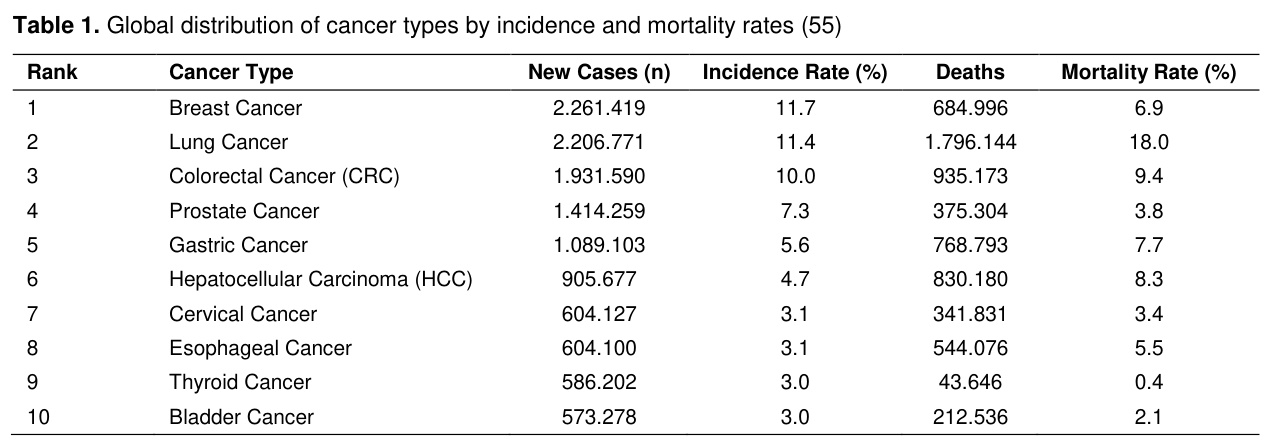
Microbial components and metabolites modulate tumor progression through Toll-like receptor–mediated inflammation, epithelial–mesenchymal transition, and cellular proliferation. In addition to bacteria, fungal and viral components also play a role in carcinogenesis, and species of Malassezia have been shown to contribute to pancreatic cancer through complement activation [53,54]. The global distribution of major cancer types according to incidence and mortality rates is summarized in Table 1 [55].
The gut microbiota is considered a critical regulator in the pathogenesis of colorectal cancer (CRC). Dysbiosis promotes tumor development through disruption of epithelial barrier integrity, alterations in microbial metabolite balance, and increased chronic inflammation [56]. In patients with CRC, an increase in bacteria such as Fusobacterium, Porphyromonas, and Peptostreptococcus has been reported, whereas beneficial genera such as Faecalibacterium and Bifidobacterium are decreased [5]. Experimental models have confirmed that microbiota composition plays a determining role in tumor development and the inflammatory microenvironment [57]. Accordingly, microbiota-based approaches have emerged as promising strategies for the diagnosis and treatment of CRC, aiming to improve tumor control through modulation of microbial metabolites and regulation of the immune response [49]. Therefore, it is suggested that microbiota-derived inflammatory signals may promote tumor progression by increasing the expression of angiogenic factors such as VEGF and Endoglin, and that these processes may be modulated by COX-2 inhibitors [58].
Colorectal Cancer and Microbiota
Colorectal cancer (CRC) is one of the most common malignancies worldwide and represents a major public health concern [59]. The development of CRC begins with the transformation of normal epithelium into a hyperproliferative phenotype and progresses to invasive cancer through the adenoma–carcinoma sequence [60]. The majority of cases are sporadic, and major risk factors include obesity, type 2 diabetes, inflammatory bowel diseases, and lifestyle-related factors [61].
Hepatocellular Carcinoma and the Gut–Liver Axis
Hepatocellular carcinoma (HCC) is an aggressive malignancy that most commonly develops on the background of chronic liver disease and cirrhosis. In recent years, the bidirectional relationship between the gut microbiota and the liver has been evaluated within the framework of the gut–liver axis, and it has been shown to play an important role in the pathogenesis of HCC [52,62]. Dysbiosis and disruption of intestinal barrier integrity lead to the translocation of microbial products to the liver via the portal circulation and to the activation of inflammatory signaling pathways mediated by Toll-like receptors. This process promotes hepatocarcinogenesis by increasing chronic inflammation, fibrosis, and cellular proliferation. In particular, the activation of pathways such as the NF-κB signaling pathway by microbial metabolites contributes to tumor development by suppressing cell death [63].
Clinical studies have demonstrated a distinct dysbiotic microbiota profile in patients with HCC. In these patients, an increase in pathogenic bacteria such as Bacteroides and Enterobacteriaceae, along with a decrease in beneficial bacteria such as Bifidobacterium and Akkermansia, has been reported, and these alterations are thought to be associated with disease progression [64-66].
Veterinary Perspective and Comparative Oncology
Studies in veterinary species have demonstrated that gastrointestinal microbial communities are influenced by host-related and environmental factors and may include both commensal and potentially opportunistic microorganisms [67]. Comparative oncology studies have increasingly demonstrated that naturally occurring cancers in animals share important molecular, immunological, and tumor microenvironment characteristics with human malignancies [68,69]. Companion animals, particularly dogs and cats, spontaneously develop various neoplasms including mammary tumors, lymphoma, osteosarcoma, and gastrointestinal tumors, making them valuable translational models for investigating cancer biology and host–microbiota interactions [70-72]. Similar to humans, alterations in gut microbial composition and immune responses have been associated with disease progression and inflammatory mechanisms in veterinary species [69,73]. Therefore, veterinary comparative oncology may provide a valuable framework for understanding microbiota-mediated mechanisms in cancer development and for identifying novel diagnostic and therapeutic approaches applicable to both human and animal health.
Conclusion
The gut microbiota plays an important role in cancer development through metabolic, immune, and inflammatory mechanisms and has emerged as a key regulator of host homeostasis. Increasing evidence suggests that microbiota-associated alterations contribute to carcinogenesis and tumor progression. Furthermore, similar host–microbiota interactions reported in veterinary medicine highlight the value of comparative oncology. Within the One Health framework, integrating human and veterinary evidence may improve understanding of cancer biology and support the development of novel diagnostic and therapeutic strategies.References
- Dismukes GC, Klimov VV, Baranov SV, et al. The origin of atmospheric oxygen on Earth: the innovation of oxygenic photosynthesis. Proc Natl Acad Sci USA 2001; 98: 2170–2175.
- Friedrich MJ. Genomes of microbes inhabiting the body offer clues to human health and disease. JAMA 2013; 309: 1447–1449.
- Kodukula K, Faller DV, Harpp DN, et al. Gut microbiota and salivary diagnostics: The mouth is salivating to tell us something. BioResearch Open Access 2017; 6: 123-132.
- Brown K, DeCoffe D, Molcan E, Gibson DL. Diet-induced dysbiosis of the intestinal microbiota and the effects on immunity and disease. Nutrients 2012; 4: 1095-1119.
- Chen W, Liu F, Ling Z, Tong X, Xiang C. Human intestinal lumen and mucosa-associated microbiota in patients with colorectal cancer. PloS One 2012; 7: e39743.
- Mozaffarian D, Hao T, Rimm EB, Willett WC, Hu FB. Changes in diet and lifestyle and long-term weight gain in women and men. N Engl J Med 2011; 364: 2392-2404.
- Spyridopoulou K, Tiptiri-Kourpeti A, Lampri E, et al. Dietary mastic oil extracted from Pistacia lentiscus var. Chia suppresses tumor growth in experimental colon cancer models. Sci Rep 2017; 7: 3782.
- Lepage P, Häsler R, Spehlmann ME, et al. Twin study indicates loss of interaction between microbiota and mucosa of patients with ulcerative colitis. Gastroenterology 2011; 141: 227-236.
- De Filippo C, Cavalieri D, Di Paola M, et al. Impact of diet in shaping gut microbiota revealed by a comparative study in children from Europe and rural Africa. Proc Natl Acad Sci USA 2010; 107: 14691–14696.
- Tomasello G, Tralongo P, Damiani P, et al. Dismicrobism in inflammatory bowel disease and colorectal cancer: changes in response of colocytes. World J Gastroenterol 2014; 20: 18121–18130.
- Barrett M, Hand CK, Shanahan F, Murphy T, O’Toole PW. Mutagenesis by microbe: The role of the microbiota in shaping the cancer genome. Trends Cancer 2020; 6: 277–287.
- Guo X, Li J, Tang R, et al. High fat diet alters gut microbiota and the expression of paneth cell-antimicrobial peptides preceding changes of circulating inflammatory cytokines. Mediators Inflamm 2017; 2017: 9474896.
- Trebicka J, Macnaughtan J, Schnabl B, Shawcross DL, Bajaj JS. The microbiota in cirrhosis and its role in hepatic decompensation. J Hepatol 2021; 75 Suppl 1: S67–S81.
- Peterson J, Garges S, Giovanni M, et al. The NIH human microbiome project. Genome Res 2009; 19: 2317-2323.
- Ley RE, Peterson DA, Gordon JI. Ecological and evolutionary forces shaping microbial diversity in the human intestine. Cell 2006; 124: 837-848.
- Marchesi JR, Ravel J. The vocabulary of microbiome research: a proposal. Microbiome 2015; 3: 31.
- Turnbaugh PJ, Ley RE, Hamady M, et al. The human microbiome project. Nature 2007; 449: 804-810.
- Clarke G, Stilling RM, Kennedy PJ, et al. Minireview: Gut microbiota: the neglected endocrine organ. Mol. Endocrinol. 2014; 28: 1221-1238.
- Guarner F, Malagelada J-R. Gut flora in health and disease. Lancet 2003; 361: 512-519.
- Nicholson JK, Holmes E, Wilson ID. Gut microorganisms, mammalian metabolism and personalized health care. Nat Rev Microbiol 2005; 3: 431-438.
- Ottman N, Smidt H, de Vos WM, Belzer C. The function of our microbiota: who is out there and what do they do? Front Cell Infect Microbiol 2012; 2: 104.
- Duca FA, Lam TKT. Gut microbiota, nutrient sensing and energy balance. Diabetes Obes Metab 2014; 16 Suppl 1: 68-76.
- Hansson GC. Role of mucus layers in gut infection and inflammation. Curr Opin Microbiol 2012; 15: 57-62.
- Sherwin E, Cryan J, Dinan T, Bordenstein S, Quinn J. Microbiota and the social brain. Science 2019; 366(64659): eaar2016.
- Sender R, Fuchs S, Milo R. Revised estimates for the number of human and bacteria cells in the body. PLoS Biol 2016; 14(8): e1002533.
- Abbott A. Scientists bust myth that our bodies have more bacteria than human cells. Nature 2016.
- Dey P. All that glitters ain’t gold: The myths and scientific realities about the gut microbiota. Nutrients 2025; 17(19): 3121.
- Gerritsen J, Smidt H, Rijkers GT, de Vos WM. Intestinal microbiota in human health and disease: the impact of probiotics. Genes Nutr 2011; 6: 209-240.
- Brown AJ, Goldsworthy SM, Barnes AA, et al. The Orphan G protein-coupled receptors GPR41 and GPR43 are activated by propionate and other short chain carboxylic acids. J Biol Chem 2003; 278: 11312-11319.
- Rodes L, Khan A, Paul A, et al. Effect of probiotics Lactobacillus and Bifidobacterium on gut-derived lipopolysaccharides and inflammatory cytokines: an in vitro study using a human colonic microbiota model. J Microbiol Biotechnol 2013; 23: 518-526.
- Bäckhed F, Ding H, Wang T, et al. The gut microbiota as an environmental factor that regulates fat storage. Proc Natl Acad Sci U S A 2004; 101: 15718-15723.
- Windey K, De Preter V, Verbeke K. Relevance of protein fermentation to gut health. Mol Nutr Food Res 2012; 56: 184-196.
- Tang WHW, Wang Z, Levison BS, et al. Intestinal microbial metabolism of phosphatidylcholine and cardiovascular risk. N Engl J Med 2013; 368: 1575-1584.
- Markowiak P, Śliżewska K. Effects of Probiotics, Prebiotics, and Synbiotics on Human Health. Nutrients 2017; 9: 1021.
- Govender M, Choonara YE, Kumar P, et al. A Review of the Advancements in Probiotic Delivery: Conventional vs. Non-conventional Formulations for Intestinal Flora Supplementation. AAPS PharmSciTech 2013; 15: 29-43.
- Lourens-Hattingh A, Viljoen BC. Yogurt as probiotic carrier food. Int Dairy J 2001; 11: 1-17.
- Champagne C, Daga M. Strategies to improve the functionality of probiotics in supplements and foods. Curr Opin Food Sci 2018; 22.
- Gibson GR, Hutkins R, Sanders ME, et al. Expert consensus document: The International Scientific Association for Probiotics and Prebiotics (ISAPP) consensus statement on the definition and scope of prebiotics. Nat Rev Gastroenterol Hepatol 2017; 14: 491-502.
- Homayouni Rad A, Aghebati Maleki L, Samadi Kafil H, Fathi Zavoshti H, Abbasi A. Postbiotics as novel health-promoting ingredients in functional foods. Health Promot Perspect 2020; 10: 3-4.
- Mohanty D, Misra S, Mohapatra S, Sahu PS. Prebiotics and synbiotics: Recent concepts in nutrition. Food Biosci 2018; 26: 152-160.
- Goffin D, Delzenne N, Blecker C, et al. Will isomalto-oligosaccharides, a well-established functional food in Asia, break through the European and American market? : The status of knowledge on these prebiotics. Crit Rev Food Sci Nutr 2011; 51.
- Selhub EM, Logan AC, Bested AC. Fermented foods, microbiota, and mental health: ancient practice meets nutritional psychiatry. J Physiol Anthropol 2014; 33: 2.
- Akutko K, Stawarski A. Probiotics, Prebiotics and Synbiotics in Inflammatory Bowel Diseases. J Clin Med 2021; 10: 2466.
- Monteiro SS, Schnorr CE, Pasquali MA de B. Paraprobiotics and Postbiotics—Current State of Scientific Research and Future Trends toward the Development of Functional Foods. Foods 2023; 12: 2394.
- Sepich-Poore GD, Zitvogel L, Straussman R, et al. The microbiome and human cancer. Science 2021; 371: eabc4552.
- Yu L-X, Schwabe RF. The gut microbiome and liver cancer: mechanisms and clinical translation. Nat Rev Gastroenterol Hepatol 2017; 14: 527-539.
- Helmink BA, Khan MAW, Hermann A, Gopalakrishnan V, Wargo JA. The microbiome, cancer, and cancer therapy. Nat Med 2019; 25: 377-388.
- Hanahan D. Hallmarks of Cancer: New Dimensions. Cancer Discov 2022; 12: 31-46.
- He Y, Fu L, Li Y, et al. Gut microbial metabolites facilitate anticancer therapy efficacy by modulating cytotoxic CD8+ T cell immunity. Cell Metab 2021; 33: 988-1000.e7.
- Yerlikaya Z, Miranda-CasoLuengo R, Jahns H, et al. Beneath the surface: gut microbes, cyathostomins and resident immune cells - Characterising the baseline. Int J Parasitol 2025; 56: 104755.
- Chung L, Thiele Orberg E, Geis AL, et al. Bacteroides fragilis Toxin Coordinates a Pro-carcinogenic Inflammatory Cascade via Targeting of Colonic Epithelial Cells. Cell Host Microbe 2018; 23: 203-214.e5.
- Wang F, Meng W, Wang B, Qiao L. Helicobacter pylori-induced gastric inflammation and gastric cancer. Cancer Lett 2014; 345: 196-202.
- Aykut B, Pushalkar S, Chen R, et al. The fungal mycobiome promotes pancreatic oncogenesis via activation of MBL. Nature 2019; 574: 264-267.
- Rossi T, Vergara D, Fanini F, et al. Microbiota-Derived Metabolites in Tumor Progression and Metastasis. Int J Mol Sci 2020; 21: 5786.
- Sung H, Ferlay J, Siegel RL, et al. Global Cancer Statistics 2020: GLOBOCAN Estimates of Incidence and Mortality Worldwide for 36 Cancers in 185 Countries. CA Cancer J Clin 2021; 71: 209-249.
- Schwabe RF, Jobin C. The microbiome and cancer. Nat Rev Cancer 2013; 13: 800-812.
- Zackular JP, Baxter NT, Iverson KD, et al. The Gut Microbiome Modulates Colon Tumorigenesis. mBio 2013; 4: e00692-13.
- Ilhan N, Gungor H, Gul HF, Eroksuz H. Expression of Endoglin and Vascular Endothelial Growth Factor as Prognostic Markers in Experimental Colorectal Cancer. Anticancer Res 2016; 36: 3953-3959.
- Gungor H, Ilhan N, Eroksuz H. The effectiveness of cyclooxygenase-2 inhibitors and evaluation of angiogenesis in the model of experimental colorectal cancer. Biomed Pharmacother 2018; 102: 221-229.
- Terzić J, Grivennikov S, Karin E, Karin M. Inflammation and colon cancer. Gastroenterology 2010; 138: 2101-2114.e5.
- Brenner H, Kloor M, Pox CP. Colorectal cancer. Lancet 2014; 383: 1490-1502.
- Spanu D, Pretta A, Lai E, et al. Hepatocellular carcinoma and microbiota: Implications for clinical management and treatment. World J Hepatol 2022; 14: 1319-1332.
- Yoshimoto S, Loo TM, Atarashi K, et al. Obesity-induced gut microbial metabolite promotes liver cancer through senescence secretome. Nature 2013; 499: 97-101.
- Liu H, Wang J, He T, et al. Butyrate: A Double-Edged Sword for Health? Adv Nutr 2018; 9: 21-29.
- Ponziani FR, Bhoori S, Castelli C, et al. Hepatocellular Carcinoma Is Associated With Gut Microbiota Profile and Inflammation in Nonalcoholic Fatty Liver Disease. Hepatology 2019; 69: 107-120.
- Ren Z, Li A, Jiang J, et al. Gut microbiome analysis as a tool towards targeted non-invasive biomarkers for early hepatocellular carcinoma. Gut 2019; 68: 1014-1023.
- Khoshbakht R. Identification of some potentially pathogenic bacteria in cloacal swap samples of caged birds using partial 16S rRNA sequence analysis. F U Vet J Health Sci 2023; 37(2): 146-150.
- Santiago-Rodriguez TM. Comparative oncology using domesticated dogs and their microbiome. Front Vet Sci 2024; 11: 1378551.
- Aluai-Cunha CS, Pinto CA, Correia IADFL, Dos Reis Serra CA, Santos AAF. The animal’s microbiome and cancer: A translational perspective. Vet Comp Oncol 2023; 21: 166-183.
- Herstad KMV, Moen AEF, Gaby JC, Moe L, Skancke E. Characterization of the fecal and mucosa-associated microbiota in dogs with colorectal epithelial tumors. PloS One 2018; 13: e0198342.
- Zheng H-H, Du C-T, Yu C, et al. The Relationship of Tumor Microbiome and Oral Bacteria and Intestinal Dysbiosis in Canine Mammary Tumor. Int J Mol Sci 2022; 23: 10928.
- Breczko WJ, Bubak J, Miszczak M. The importance of intestinal microbiota and dysbiosis in the context of the development of intestinal lymphoma in dogs and cats. Cancers 2024; 16: 2255.
- Kleber KT, Iranpur KR, Perry LM, et al. Using the canine microbiome to bridge translation of cancer immunotherapy from pre-clinical murine models to human clinical trials. Front Immunol 2022; 13: 983344.
- Glikoproteinlerin Yapısı ve Fonksiyonları
- Kanser Hücrelerinin Metabolik İhtiyaçları ve Bağımlılıkları
- Sığır Amniyotik Sıvısının Tavşanlardaki Deneysel Kornea Defektlerinin İyileşmesi Üzerine Etkilerinin Histopatolojik Değerlendirmesi
- Sıçanlarda Hipertiroidizm Kaynaklı Ovaryum ve Uterus Değişiklikleri Üzerine Karvakrolün Etkisi
- Sağlık Bilimlerinde Kanser Hücre Kültürü Teknikleri, Mikro Besinler ve Protokoller: Kapsamlı Bir İnceleme