
Koyun ve Koçlarda Diyete Borik Asit İlavesinin Mineral Metabolizması Üzerine Etkisi
Volume 40, Issue 3
October 2026 · Pages 242-249
Koyun ve Koçlarda Diyete Borik Asit İlavesinin Mineral Metabolizması Üzerine Etkisi
The Effect of Boric Acid Supplementation on Mineral Metabolism in Ewes and Rams
Selçukhan AKARSU1, Dilayda KARATAŞ2, Mucahid Abdullah ŞİMŞEK3, Metin Alperen SOYDAN4, Alperen TURGUT4, Ebrar SAĞIRLAR4, Edip TORAMAN4, İlayda ATLI4, Ülkü Gülcihan ŞİMŞEK1
2Balıkesir University, Faculty of Veterinary Medicine, Department of Animal Science, Balıkesir, TÜRKİYE
3Dokuz Eylül University, Faculty of Veterinary Medicine, Department of Animal Science, İzmir, TÜRKİYE
4Fırat University, Faculty of Veterinary Medicine, ELAZIĞ, TÜRKİYE
Bu çalışmada, Şavak Akkaraman koyun ve koçlarında serum, süt ve seminal plazma mineral konsantrasyonları değerlendirilerek borik asit takviyesi ile mineral metabolizması arasındaki ilişkiler araştırılmıştır. Toplam 30 koyun ve 18 koç; kontrol (takviye uygulanmayan), B20 (20 mg/gün) ve B40 (40 mg/gün) olmak üzere üç gruba ayrılmıştır. Borik asit koçlara 45 gün boyunca uygulanırken, koyunlarda uygulamaya çiftleşmeden 17 gün önce başlanmış ve çiftleşme dönemi boyunca devam edilmiştir. Mineral analizleri için her gruptan 10 koyun ve 6 koçtan örnekler alınmıştır. Koyunlarda borik asit takviyesi, serum bor, kalsiyum, magnezyum, selenyum ve çinko konsantrasyonlarındaki artışlarla ilişkili bulunmuş (p<0.05) ve bor ile bu mineraller arasında pozitif korelasyonlar belirlenmiştir. Sütte bor ile kalsiyum, demir ve molibden konsantrasyonları arasında pozitif korelasyonlar belirlenmiştir. Koçlarda borik asit takviyesi ile serum bor konsantrasyonu arasında anlamlı pozitif korelasyon (r=0.755, p<0.001) belirlenirken, kalsiyum ve selenyum ile ilişkiler istatistiksel olarak anlamlı bulunmamıştır (p>0.05). Serum bor konsantrasyonu ile kalsiyum ve çinko arasında pozitif korelasyonlar tespit edilmiştir. Seminal plazmada borik asit takviyesi, bor, kalsiyum, bakır ve selenyum konsantrasyonlarındaki artışlarla ilişkili bulunmuş ve bor ile kalsiyum arasında güçlü pozitif korelasyon belirlenmiştir. Genel olarak, borik asit takviyesinin özellikle kalsiyum ile ilişkili etkileşimler açısından mineral profillerindeki değişikliklerle ilişkili olduğu ve mineral homeostazisi ile üremeye ilişkin mineral dengesi üzerinde potansiyel rol oynayabileceği sonucuna varılmıştır. Altta yatan mekanizmaların açıklığa kavuşturulması ve optimum takviye stratejilerinin belirlenmesi için ileri çalışmalara ihtiyaç duyulmaktadır.
This study investigated the relationships between boric acid supplementation and mineral metabolism in Şavak Akkaraman ewes and rams by evaluating serum, milk, and seminal plasma mineral concentrations. A total of 30 ewes and 18 rams were allocated to three groups: control (no supplementation), B20 (20 mg/day), and B40 (40 mg/day). Boric acid was administered to rams for 45 days, while supplementation in ewes began 17 days before mating and continued throughout the mating period. Mineral analyses were performed on samples collected from 10 ewes and 6 rams per group. In ewes, supplementation was associated with higher serum boron, calcium, magnesium, selenium, and zinc concentrations (p<0.05), with positive correlations between boron and these minerals. Milk boron was positively correlated with calcium, iron, and molybdenum concentrations. In rams, supplementation was significantly correlated with serum boron (r=0.755, p<0.001), whereas correlations with calcium and selenium were not significant (p>0.05). Serum boron was positively correlated with calcium and zinc. In seminal plasma, supplementation was associated with higher boron, calcium, copper, and selenium concentrations, with a strong positive correlation between boron and calcium. Overall, boric acid supplementation was associated with changes in mineral profiles, particularly calcium-related interactions, suggesting a potential role in mineral homeostasis and reproductive mineral balance. Further research is needed to clarify the mechanisms and optimize supplementation strategies.
Introduction
Sheep farming is a sector of strategic importance for global food security and economic development. As the world population is expected to reach 9.8 billion by 2050, the sheep farming industry will play a key role in meeting the increasing demand for protein. Sheep farming contributes to economic diversity by providing products such as meat, milk, wool, and leather while also supporting environmental sustainability due to its low carbon footprint. With these characteristics, sheep farming will continue to hold a significant share in agricultural and food systems in the future, just as it does today [1].Nutrition, particularly the use of minerals, is of great importance in the efficient raising of sheep. Minerals are essential for the healthy functioning of all living organisms. They play critical roles in bone development, regulation of muscle and nerve functions, maintenance of water-electrolyte balance, support of the immune system, and biochemical reactions in metabolic processes [2]. Although the daily requirements for minerals are lower compared to macronutrients, their regular and adequate intake is essential for sustaining these metabolic processes in the body [3]. While macro minerals (such as calcium, phosphorus, and magnesium) are found in high concentrations in the body, micro minerals (such as zinc, copper, manganese, iron, and selenium) are required in smaller amounts but are equally important for biological functions. Mertz [4] classified elements with a daily requirement of less than 18 mg as "trace elements." Although these minerals are found in low levels in tissues, they are indispensable for the continuity of metabolic and physiological processes. Each mineral has a unique function in the body that cannot be replaced by another element [5].
Boron (B), a naturally occurring element widely found in water, rocks, and soil, does not exist in its elemental form in nature but predominantly (approximately 96%) occurs as boric acid (BA). Scientific studies have demonstrated that boron plays critical biological, metabolic, and physiological roles in both plants and animals. Boric acid, due to its chemical structure, acts similarly to a catalyst and plays a key role in the modulation of numerous enzymes. BA, which contains approximately 17.5% elemental boron, is vital for fundamental biological functions such as cell growth, reproduction, development, and energy metabolism [6]. Furthermore, boric acid has been scientifically shown to possess antioxidant, anti-inflammatory, and anticancer properties. It also exerts positive effects on embryonic development, bone mineralization, immune system function, psychomotor skills, and cognitive performance [7]. Recent research has particularly focused on the potential benefits of boric acid on Sertoli cells in rats, Leydig cells in mice, and fetal embryonic development [8]. The impact of boric acid on mineral metabolism is especially noteworthy in the context of its metabolic functions in bone tissue [9]. It has been reported that BA exerts biologically significant effects on at least 26 different enzymes related to energy and mineral metabolism, supporting its classification as an essential element [5]. Additionally, boric acid has been found to modulate the metabolism of calcium (Ca), phosphorus (P), and magnesium (Mg), thereby influencing immune system functions [10]. Despite these findings, scientific investigations into the biochemical and physiological functions of boric acid continue to grow rapidly. Considering the significant effects of boric acid on metabolism, the aim of this study was to investigate the effects of dietary boric acid supplementation on mineral concentrations in body fluids of ewes and rams, and to identify potential interactions among minerals altered by boric acid intake. This study sought to assess the relationships between boron and other minerals, thereby offering a more comprehensive evaluation of the potential regulatory influence of boric acid on mineral metabolism, in relation to sex and the type of physiological fluid, rather than identifying direct treatment effects.
Material and Method
Research and Publication Ethics: Approval for this research was obtained from the Fırat University Local Ethics Committee for Animal Experiments (Decision No. 2023/20-01, dated 05.12.2023).Experimental Design: This study was conducted on a farm located in the Baskil district of Elazığ Province, Türkiye, housing 510 lactating Şavak Akkaraman ewes and 36 rams. Prior to the initiation of the study, all rams and ewes were clinically examined, ear tags were replaced where missing, and both body condition scores (BCS) and ages were recorded. At the beginning of the experiment, semen samples were collected from all rams for initial semen analysis. Based on semen quality, age, and BCS of the rams, and age and BCS of the ewes, the animals were randomly allocated to the following experimental groups, ensuring homogeneity across groups.
Research Groups: Control group (C): No supplementation (Group 1).
Boric acid group-20 (B20): Ewes and rams received 20 mg/day of boric acid (Group 2).
Boric acid group-40 (B40): Ewes and rams received 40 mg/day of boric acid (Group 3).
The boric acid doses were determined based on the recommendations of Krishnan et al. [11] and Cortés et al. [12]. The 20 mg dose of boric acid contained approximately 3.5 mg of elemental boron, while the 40 mg dose contained approximately 7 mg.
For each group, 10 ewes and 6 rams were selected according to the aforementioned criteria. To prevent mixing between groups during the supplementation period, animals in each group were marked with different colors using livestock paint. During the grazing season, the animals were fed on pasture when outdoors and with a barley-straw mixture when housed indoors. In the enclosed area, each ewe was provided with an average space of 1.60 m².
The boric acid was administered as an aqueous stock solution prepared daily for each group. The required amount of boric acid was placed in an Erlenmeyer flask, and distilled water was added to reach 40 mL. The solution was mixed using a magnetic stirrer until fully dissolved. The prepared solution was then administered orally to each animal (40 mL/animal) using a syringe. The control group was given 40 mL of water using the same method. Boric acid supplementation was initiated 45 days before ram introduction, corresponding to the spermatogenesis period [13]. In ewes, supplementation was initiated 17 days before ram introduction, corresponding to the follicular development period (approximately 17–18 days) [14], and was continued throughout the mating period. The supplementation protocol was designed to cover at least two estrous-cycle phases (a minimum of 34 days in total), and supplementation was continued until all ewes had been naturally mated when the mating period was extended. Biological samples were collected at the end of the scheduled sampling period. The samples were immediately stored under appropriate conditions and transported to the laboratory for analysis. From each group, blood and milk samples were collected from 10 randomly selected ewes, and blood and semen samples were collected from all 6 rams. Blood was drawn from the jugular vein into serum gel tubes, semen samples were collected using an artificial vagina, and milk samples were taken from each ewe after complete milking, directly from the milk collection container, and appropriately labeled. Blood samples were centrifuged at 3000 rpm for 15 minutes at room temperature to separate the serum, which was then stored at –60 °C until analysis. Semen samples were centrifuged at 1000 rpm for 20 minutes to separate seminal plasma, which was transferred to Eppendorf tubes and stored at –60 °C. Milk samples were also stored under the same conditions. All samples were processed and analyzed for mineral content at the Central Research Laboratory of Bingöl University.
Laboratory Analyses: For the ICP-MS analysis, approximately 1000 mg of each sample was weighed with a precision of 0.001 g and placed into Teflon digestion vessels. To each vessel, 10 mL of 65% (w/w) nitric acid (Merck, Germany) was added. A reagent blank, containing only acid, was prepared simultaneously. The samples were digested in a closed-vessel microwave digestion system (CEM MARS 6 ONE TOUCH, USA), where the temperature was gradually increased to 210 °C and maintained for a total of 40 minutes. After cooling, the digested solutions were transferred to 50 mL volumetric flasks and brought to volume with ultrapure water. The solutions were then diluted appropriately and prepared for inductively coupled plasma–mass spectrometry (ICP-MS) analysis. Calibration standards were prepared by diluting multi-element standard solutions with a 1% suprapure nitric acid–ultrapure water mixture. Both macro elements (e.g., calcium (Ca), iron (Fe), magnesium (Mg)) and trace elements (e.g., cobalt (Co), copper (Cu), manganese (Mn), selenium (Se), zinc (Zn), molybdenum (Mo), and boron (B)) were quantified. All analyses were performed using a NexION® 2000 C ICP-MS system (PerkinElmer® Inc., USA), equipped with a quartz nebulizer, cyclonic spray chamber, and auto-sampler. The rinse solution was prepared using a 1% suprapure nitric acid–ultrapure water mixture, and the ultrapure water (18.2 MΩ·cm) was obtained from a Sartorius™ Arium Pro purification system. Yttrium-89 (89Y, 25 ppb) was used as the internal standard in all measurements. The samples were introduced into the system using argon and helium gas flow, and the instrument was operated and controlled using Syngistix for ICP-MS Software version 2.2.
Statistical Analyses: To examine the relationships between the mineral levels in the research groups (Control, B20, and B40), the Spearman correlation test was used. To investigate the relationships among the mineral levels themselves, the Pearson correlation test was applied. All statistical analyses were performed using the SPSS statistical software package, and relationships were considered statistically significant at p≤0.05. The sample size was calculated using G*Power software (version 3.1) with the Exact test family and the Correlation: Bivariate normal model statistical test. An a priori power analysis was conducted using a two-tailed test, a significance level (α) of 0.05, a statistical power of 80%, and a null hypothesis correlation coefficient (pH0) of 0.
For ewes, an expected correlation coefficient (pH1) of 0.49 was used, indicating that a minimum total sample size of 30 animals was required, with an actual statistical power of 80.92%. For rams, an expected correlation coefficient (pH1) of 0.61 was used, indicating that a minimum total sample size of 18 animals was required, with an actual statistical power of 80.78%. Mineral measurements were obtained from independent individuals.
Results
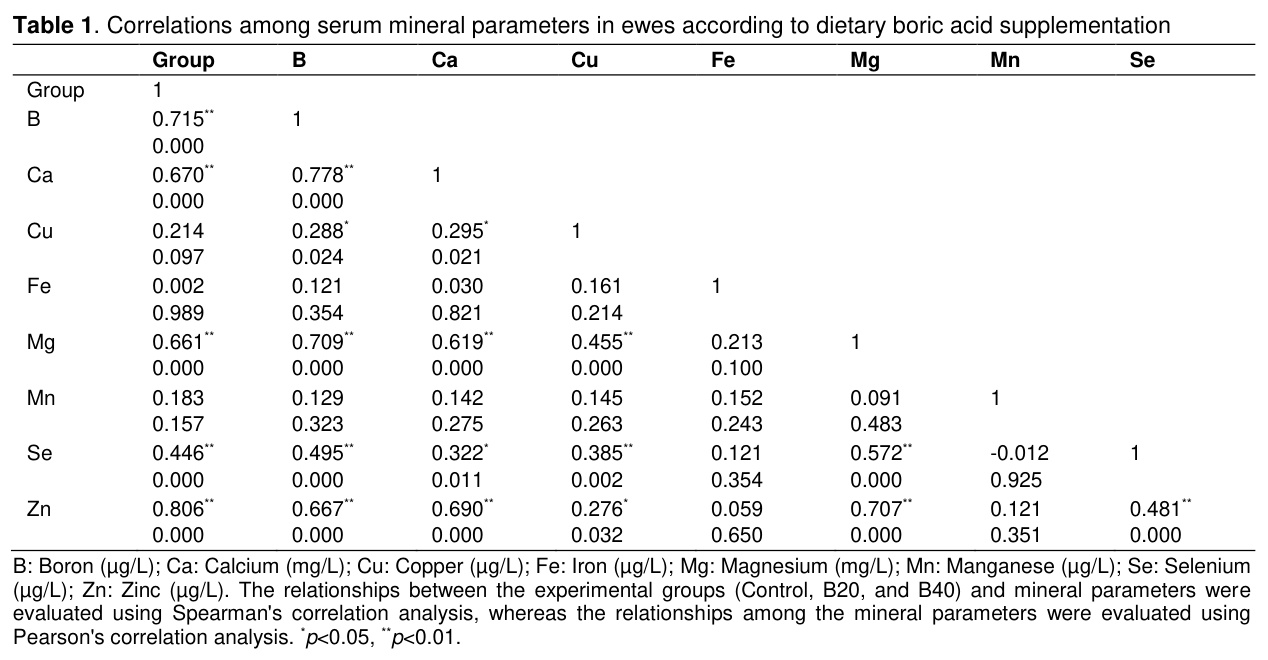
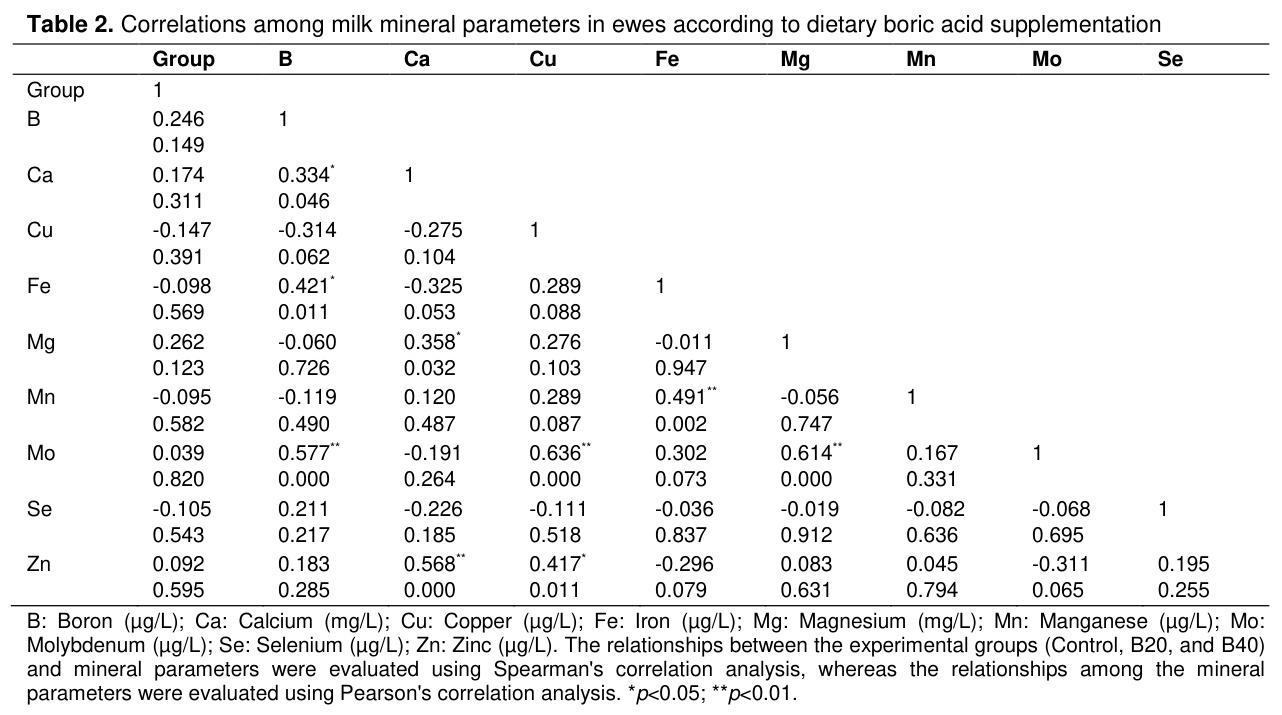
The effects of the experimental treatments on serum mineral concentrations in Şavak Akkaraman ewes are presented in Table 1. Increasing levels of boric acid supplementation were significantly and positively correlated with serum boron (r=0.715), calcium (r=0.670), magnesium (r=0.661), selenium (r=0.446), and zinc (r=0.806) concentrations (p<0.01). Significant positive correlations were found between serum boron and Ca (r=0.778), Mg (r=0.709), Se (r=0.495), Zn (r=0.667, p<0.01), and Cu (r=0.288, p<0.05) concentrations. Additionally, elevated serum Ca levels were positively correlated with Mg (r=0.619), Zn (r=0.690, p<0.01), as well as Cu (r=0.295) and Se (r=0.322) concentrations (p<0.05). Serum Cu concentration showed significant positive correlations with Mg (r=0.455), Se (r=0.385) (p<0.01), and Zn (r=0.276, p<0.05). Moreover, serum Mg levels were positively associated with Se (r=0.572) and Zn (r=0.707), and serum Se levels were positively correlated with Zn (r=0.481) (p<0.01).The effects of boric acid supplementation on milk mineral concentrations in Şavak Akkaraman ewes are shown in Table 2. No statistically significant correlations were found between treatment groups and the measured milk mineral concentrations. However, a significant positive correlation was observed between milk B and Ca concentrations (r=0.334, p=0.046). Furthermore, significant positive correlations were identified between milk B and Fe (r=0.421, p=0.011) and between milk B and Mo (r=0.577, p<0.001).
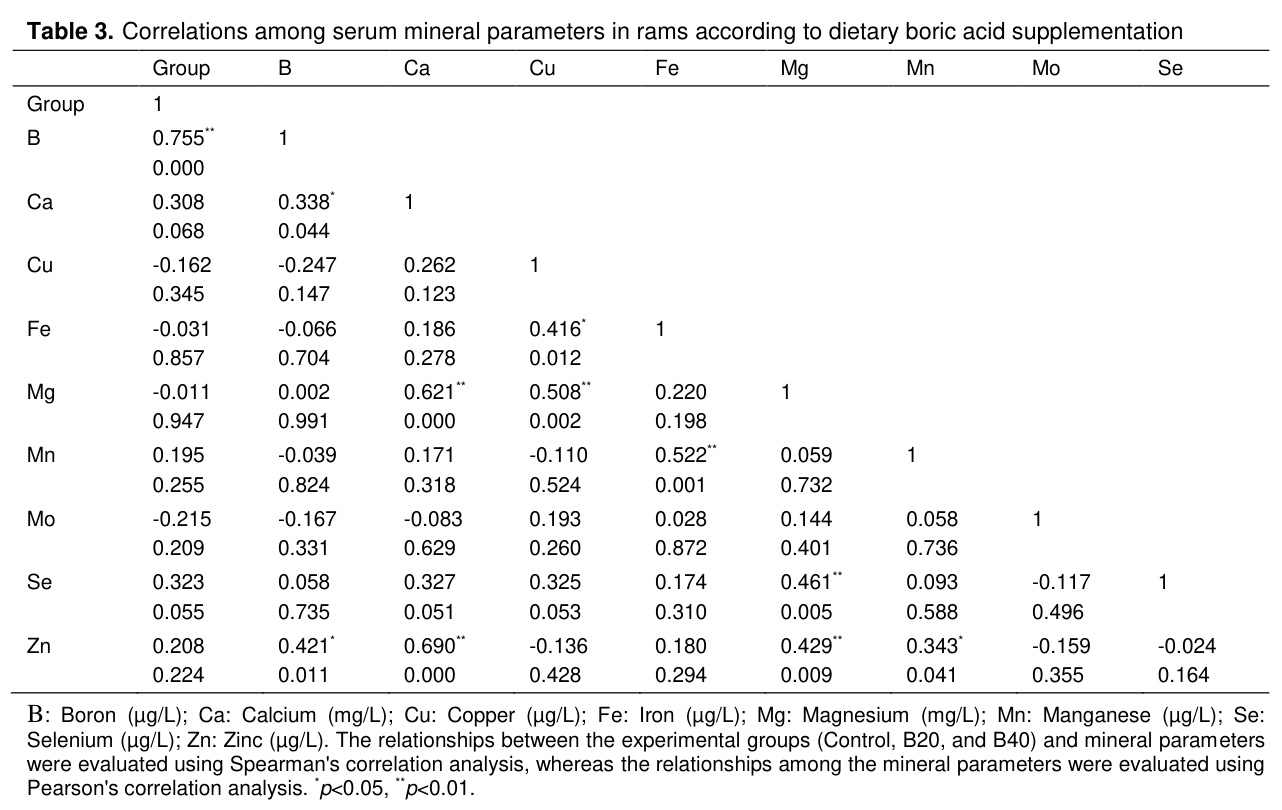
The effects of the treatments on serum mineral concentrations in Şavak Akkaraman rams are presented in Table 3. Increasing levels of boric acid supplementation were significantly positively correlated with serum B concentrations (r=0.755, p<0.001), whereas the correlations with Ca (r=0.308, p=0.068) and Se (r=0.323, p=0.055) did not reach statistical significance. Serum B concentrations were significantly and positively correlated with Ca (r=0.338, p=0.044) and Zn (r=0.421, p=0.011). Additionally, serum Ca concentrations were positively correlated with Mg (r=0.621) and Zn (r=0.690, p<0.01). Significant positive correlations were also observed between Cu and Fe (r=0.416, p<0.05), Cu and Mg (r=0.508), Fe and Mn (r=0.522), Mg and Se (r=0.461), and Mg and Zn (r=0.429, p<0.01).
Discussion
Minerals play critical roles in the physiological processes of organisms, yet the mechanisms underlying their interactions remain actively investigated. The balance between Ca and Mg is especially important for systemic homeostasis. Examination of findings from ewe and ram serum samples (Tables 1 and 3) revealed a strong positive correlation between B and Ca, and a high correlation between B and Mg in ewes. These findings suggest a potential regulatory role of boron in the metabolism of the macrominerals Ca and Mg. Parallel to these findings, Kabu et al. [15] reported that boron supplementation increased serum Ca and Mg levels in dairy cows. Other studies [16] have suggested that B enhances mineral retention, improving the bioavailability of Ca and Mg, or that B supplementation reduces their excretion, thereby supporting more effective utilization and homeostasis of these minerals. However, conflicting results exist: Basoglu et al. [17] found no effect of boron supplementation on plasma Ca levels in cows, and Ibrahim et al. [18] reported no significant impact on serum Ca in rams. These discrepancies may arise from dose-dependent effects or differences in experimental conditions.Analyses of milk mineral content (Table 2) indicated a significant positive correlation between B and Ca concentrations. However, unlike serum mineral profiles in ewes, no significant relationship was found between milk B levels and other key minerals such as Mg. Notably, statistically significant positive correlations were also observed between B and Fe and between B and Mo concentrations in milk. These findings suggest that boron may be associated with the coordinated regulation of calcium, iron, and molybdenum metabolism in milk. The absence of significant relationships with certain minerals, such as Mg, may reflect tissue-specific differences in mineral metabolism. Furthermore, the positive associations between B, Fe, and Mo may indicate shared regulatory mechanisms or common physiological factors influencing their concentrations in milk.
In rams, the positive correlation between serum B and Ca suggests a potential association with calcium metabolism, possibly involving parathyroid hormone (PTH) and calcitriol regulation. However, no significant correlation was observed between serum B and Se. The positive correlation between B and Zn may indicate enhanced Zn absorption or altered regulation of zinc-binding protein expression associated with boron supplementation [19]. The more pronounced mineral increases observed in ewes may point to the influence of estrogen levels on boron metabolism. In ewes, the strong positive correlations between serum B and Ca (r=0.778) and between B and Zn (r=0.667) are consistent with previous hypotheses suggesting that boron may influence Ca-ATPase activity and intestinal mineral transporter (TRPV6 and ZnT1) expression, potentially affecting bone resorption and mineral homeostasis. The positive correlations among Ca, Mg, and Zn observed in both sexes may indicate coordinated changes in mineral metabolism. Collectively, these findings imply that boric acid may influence mineral metabolism via modulation of steroid hormone receptors, regulation of mineral transporter gene expression, and effects on bone remodeling processes [20].
Similarly, Pradhan et al. [21] reported that dietary BA supplementation (0-100 mg/kg) in broilers increased calcium and phosphorus retention while reducing manganese and iron absorption, resulting in decreased serum Mn and Fe levels. Özkan and Karabağ [22] observed that 200 mg/kg boric acid reduced magnesium and zinc levels but increased Se in mice, supporting species-specific differences in boron's impact on mineral metabolism [18].
Current data suggest that increased serum Ca concentrations in ewes may operate synergistically with Mg and Zn metabolism. Shlisky [23] emphasized that calcium supports Mg absorption and transport, and their balance is critical for bone metabolism and neuromuscular function. The strong positive correlation between Ca and Zn is consistent with previous hypotheses suggesting that Ca may modulate the expression of zinc-binding proteins. Serum Cu levels in ewes align with its central role in antioxidant systems (e.g. superoxide dismutase activity) and mineral interactions. Particularly, the Cu-Se relationship reflects copper’s indirect role in selenoprotein (such as glutathione peroxidase) synthesis. The weaker Cu-Zn correlation may indicate competitive interactions during intestinal absorption [24].
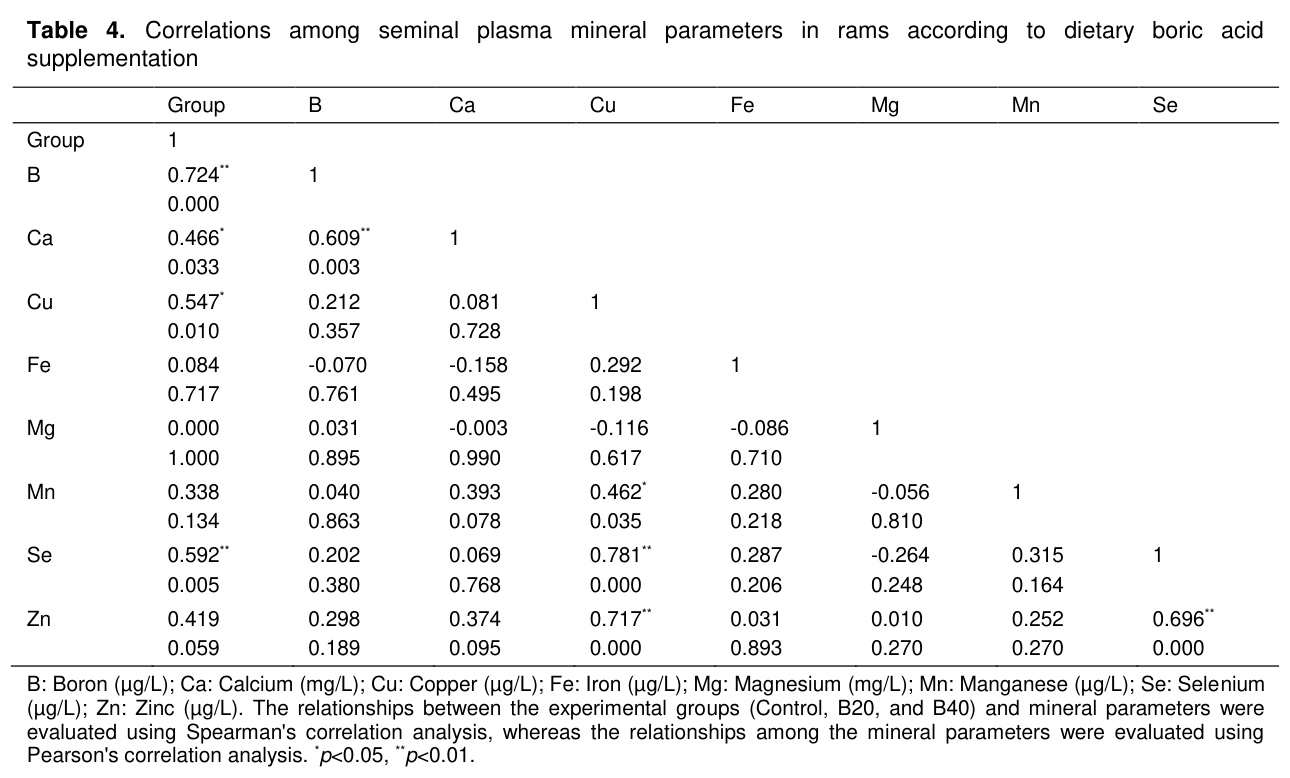
In rams, no significant correlations were observed between seminal plasma Ca and Mg (r=−0.003, p=0.990) or between Ca and Zn (r=0.374, p=0.095), indicating that the present findings do not support direct associations among these minerals in seminal plasma. Nevertheless, Ca plays an important role in sperm membrane stability and the acrosome reaction, while Zn contributes to testicular development and testosterone synthesis. Significant positive correlations between Cu and Mn (r=0.462, p=0.035) and between Cu and Se (r=0.781, p<0.001) in seminal plasma may reflect potential interactions among minerals involved in antioxidant defense mechanisms [25]. Iron's role in sperm membrane lipid peroxidation and copper’s requirement for superoxide dismutase activity underscore their importance in minimizing oxidative stress during reproduction. Increased reactive oxygen species (ROS) production in summer heat stress makes maintaining this balance even more critical. Moderate correlations between Mg-Se and Mg-Zn reflect integrated hormonal regulation and antioxidant defense during reproduction in rams. Selenium's role in protecting sperm DNA integrity through glutathione peroxidase activity and Mg’s modulation of pituitary hormone release enhancing testosterone production directly impact mating performance [3]. Selenium supplementation under heat stress improves sperm motility, supported by studies such as Lekola et al. [26]. Environmental heat during summer increases thermoregulatory energy demands in rams, potentially disrupting mineral homeostasis. Notably, Mg and Zn losses through sweating suggest mineral supplementation is critical during breeding season.
B is known to influence calcium metabolism by enhancing vitamin D and magnesium utilization. Adequate Ca levels are vital during increased metabolic demand periods such as lactation. In warm seasons, when animals graze on pasture, B supplementation may elevate milk boron levels and thereby affect Ca metabolism. Positive correlations observed between milk B and Fe and Mo suggest that these elements may be influenced by common physiological or metabolic regulatory mechanisms [27]. Environmental factors such as mineral content of pasture plants and stress may intensify these interactions. Hormonal changes during lactation also modulate mineral balance and these relationships. The positive correlations with Fe and Mo suggest that these elements should be considered when formulating mineral supplementation strategies.
Overall, these results demonstrate that mineral homeostasis is a complex, dynamic system, where changes in one mineral may exert synergistic or antagonistic effects on others. The interactions of boron with certain macro (calcium, magnesium) and micro (zinc, iron, selenium) minerals were evaluated, with variations across biological fluids (serum, milk, seminal plasma). The data suggest that boron supplementation in ewes and rams may be associated with sex- and tissue-specific differences in mineral profiles.
References
- Acosta A. Transforming the livestock sector through the sustainable development goals. Food and Agriculture Organization of the United Nations (FAO); 2018.
- Sizova EA, Miroshnikov SA, Notova SV, et al. The effects of the housing system and milk productivity on serum and fecal levels of essential and toxic trace elements and minerals. Environ Sci Pollut Res 2025; 32(9): 5062-5077.
- Wang J, Zhang X, Zeng Y, et al. Mo and Sn exposure associated with the increased of bone mineral density. BioMetals 2025; 1-14.
- Mertz W. The essential trace elements. Science 1981; 213(4514):1332-1338.
- Stawski TM, Salvalaglio M, Wallace AF, De Yoreo JJ. The birth of minerals: From single step to multiple step mechanisms. Elements 2025; 21(1): 25-32.
- Aykal MB, Gecin MN, Sogut I, Kar F, Taskin AC. Effects of boric acid as maternal feed additives on the development and sex ratio of mouse pups. Biol Trace Elem Res 2025; 202(12): 5572-5579.
- Zhang X, Wang G, Chen S. Boric acid alleviates lipopolysaccharide-induced acute lung injury in mice. Biol Trace Elem Res 2025; 203(3): 1494-1501.
- Yalcin CO, Abudayyak M. Effects of boric acid on cell death and oxidative stress of mouse TM3 Leydig cells in vitro. J Trace Elem Med Biol 2020; 1: 126506.
- Abdelnour SA, El-hack MEA, Swelum AA, et al. The vital roles of boron in animal health and production: A comprehensive review. J Trace Elem Med Biol 2018; 50: 296-304.
- Khaliq H, Juming Z, Ke-mei P. The physiological role of boron on health. Biol Trace Elem Res 2018; 186:31-51.
- Krishnan BB, Selvaraju S, Gowda NKS, et al. Dietary boron supplementation enhances sperm quality and immunity through influencing the associated biochemical parameters and modulating the genes expression at testicular tissue. J Trace Elem Med Biol 2019; 55: 6-14.
- Cortés S, Espinoza-Navarro O, Ferreccio C. High exposure to boron in drinking water and sperm parameters in Chilean young people. Int J Morphol 2017; 35: 99-104.
- Yeni D, Gündoğan M. Koçlarda bazı androlojikal parametrelerin ve biyokimyasal özelliklerin mevsimle ilişkisi. Kocatepe Vet J 2018; 11(111): 70-85.
- Özyurtlu N, Bademkiran S. Koyunlarda östrus senkronizasyonu ve östrusu uyarma yöntemleri. Dicle Univ Vet Fak Derg 2018; 1(1): 17- 22.
- Kabu M, Birdane FM, Civelek T, Uyarlar C. Affects of boron administration on serum Ca, Mg and P of peripartum cows. Arch Anim Breed 2013; 56(1): 733-741.
- Sharma A, Mani V, Pal RP, et al. Effect of boron supplementation on nutrient utilization and productive performance of peripartum Murrah buffaloes. Biol Trace Elem Res 2022; 200(10): 4303-4315.
- Basoglu A, Baspinar N, Tenori L, et al. Effects of boron supplementation on peripartum dairy cows’ health. Biol Trace Elem Res 2017; 179: 218-225.
- Ibrahim TB, Abdel-wahab A, Aziz RLA, et al. Dietary boron supplementation and its impact on testicular function, thyroid activity and serum calcium in rams. Small Rumin Res 2019; 174: 156-162.
- Estevez-Fregoso E, Kilic A, Rodríguez-Vera D, et al. Effects of boron-containing compounds on liposoluble hormone functions. Inorganics 2023; 11(2): 84.
- Bakken NA, Hunt CD. Dietary boron decreases peak pancreatic in situ insulin release in chicks and plasma insulin concentrations in rats regardless of vitamin D or magnesium status. J Nutr 2003; 133(11): 3577-3583.
- Pradhan SK, Kumar B, Raval AP, et al. Effect of dietary boron supplementation on serum biochemical and carcass characteristics in broiler chicken. J Pharmacogn Phytochem 2020; 9(2S): 367-371.
- Özkan E, Karabağ F. Investigation of boron effect on trace elements and antioxidant capacity in paracetamol-induced nephrotoxicity model. Vet Hekim Derneği Derg 2020; 91(1): 25-35.
- Shlisky J, Mandlik R, Askari S, et al. Calcium deficiency worldwide: prevalence of inadequate intakes and associated health outcomes. Ann NY Acad Sci 2022; 1512(1): 10-28.
- Einhorn V, Haase H, Maares M. Interaction and competition for intestinal absorption by zinc, iron, copper, and manganese at the intestinal mucus layer. J Trace Elem Med Biol 2024; 84: 127459.
- Zargari S, Towhidi A, Rezayazdi K, Kastelic JP. Does co-supplementation of zinc, manganese, and copper affect plasma testosterone, sperm quality, and anti-oxidant enzyme activities of ram? Vet Res Forum 2025; 16(3): 167-174.
- Lekola KP, Ngcobo MS, Lehloenya KC. Selenium efficiency in protecting sperm quality and testicular parameters of South African indigenous Zulu rams exposed to heat stress. Trop Anim Health Prod 2024; 56(8): 1.
- Pajarillo EAB, Lee E, Kang DK. Trace metals and animal health: Interplay of the gut microbiota with iron, manganese, zinc, and copper. Anim Nutr 2024; 7(3): 750-761.
- YARI ENTANSİF ŞARTLARDA SAKIZ X AKKARAMAN MELEZ(F1 ve G1) KOYUNLARDA DÖL VE SÜT VERİM ÖZELLİKLERİ
- KOYUN KARACİĞER DOKU ARGİNAZININ GUANİDİN VE BAZI AMİNO ASİTLER TARAFINDAN İNHİBİSYONU VE İNHİBİSYONUN KİNETİĞİ
- KOÇLARDA SPERMA KALİTESİ ÜZERİNE KASİÇİ VİTAMİN C UYGULAMALARININ ETKİSİ
- KOYUNLARDA ÜRİNER SİSTEMİN NORMAL VE HASTALIKLI YAPILARININ ULTRASONOGRAFİK İNCELENMESİ
- KARS İLİNDE ÇİĞ SÜTLERDEN Listeria monocytogenes İZOLASYONU