
Arıcılık İşletmelerinin Yapısal Analizi: TR82 Bölgesi Örneği
Volume 40, Issue 3
October 2026 · Pages 279-287
Arıcılık İşletmelerinin Yapısal Analizi: TR82 Bölgesi Örneği
Structural Analysis of Beekeeping Enterprises: A Case Study of the TR82 Region
Murat POLAT1, Mustafa Bahadır ÇEVRİMLİ2, Burak MAT2, Ahmet Cumhur AKIN3, Mehmet Saltuk ARIKAN4, Mustafa Agah TEKİNDAL5
2Selçuk University, Faculty of Veterinary Medicine, Department of Animal Health Economics and Management, Konya, TÜRKİYE
3Mehmet Akif Ersoy University, Faculty of Veterinary Medicine, Department of Animal Health Economics and Management, Burdur, TÜRKİYE
4Fırat University, Faculty of Veterinary Medicine, Department of Animal Health Economics and Management, Elazığ, TÜRKİYE
5İzmir Katip Çelebi University, Faculty of Medicine, Department of Biostatistics, İzmir, TÜRKİYE
Bu çalışma, TR82 Bölgesi arıcılık işletmelerinin yapısal özelliklerini sosyo-demografik göstergeler, üretim deseni, gelir kaynakları, kovan varlığı ve kovan kayıpları üzerinden analiz etmeyi amaçlamıştır. Çalışmada, Arıcılık Kayıt Sistemi’ne kayıtlı 30 kovan ve üzeri işletmelerden tabakalı tesadüfi örnekleme ile belirlenen 74 işletme sahibiyle 2020 yılında veri temin formu uygulanmıştır. İşletmeler kovan sayılarına göre küçük (30-74), orta (75-149) ve büyük (150 ve üzeri) ölçek olarak sınıflandırılmış, elde edilen veriler tanımlayıcı istatistiklerle değerlendirilmiştir. Bulgular bölgede sabit ve il içi gezginci arıcılığın baskın olduğunu, iller arası gezginci arıcılığın ise yok denecek kadar az olduğunu göstermektedir. Üretim deseninde bal temel ürün olmakla birlikte, işletmelerin önemli bir kısmı polen ve propolis pazarlamakta olup kestane balı çiçek balına göre daha yaygındır. Arıcı nüfusu ağırlıklı olarak 41-60 yaş aralığında yoğunlaşmakta, genç yaş grubunun payı oldukça düşük kalmaktadır. Eğitim düzeyi çoğunlukla ilköğretim seviyesinde olup, küçük ölçekli işletmelerde üniversite mezunu oranı görece yüksektir. Arıcılık büyük oranda emeklilik veya tarım dışı ek gelir amacıyla yürütülmekte, tek ekonomik faaliyet olma oranı son derece sınırlı kalmaktadır. Ortalama kovan varlığı 117.15 adet olarak hesaplanırken, ortalama kovan kaybı 13.53 adet düzeyinde gerçekleşmiş ve en yüksek kayıplar orta ölçekli işletmelerde gözlenmiştir. Sonuç olarak, TR82 Bölgesi arıcılığı geleneksel yapısını korumakla birlikte, genç girişimci eksikliği, katma değerli ürün çeşitlendirmesindeki yetersizlik ve düşük profesyonelleşme düzeyi gibi yapısal zafiyetler taşımaktadır.
This study aimed to analyze the structural characteristics of beekeeping enterprises in the TR82 Region through socio-demographic indicators, production patterns, income sources, hive stock, and colony losses. In 2020, data collection forms were administered to 74 beekeepers selected via stratified random sampling from operations registered in the Beekeeping Registration System with 30 or more hives. Operations were categorized by hive count as small (30–74), medium (75–149), and large (150 and above) scales, and collected data were evaluated using descriptive statistics. The findings demonstrate that stationary and intra-provincial migratory beekeeping predominate in the region, while inter-provincial migratory beekeeping is virtually non-existent. Although honey is the primary commodity in the production pattern, a significant portion of enterprises market pollen and propolis, with chestnut honey more prevalent than blossom honey. The beekeeper population is heavily concentrated in the 41–60 age group, with a remarkably low share of young individuals. Educational attainment is mostly at the primary school level, though the proportion of university graduates is relatively higher in small-scale enterprises. Beekeeping is largely pursued as a retirement activity or a non-agricultural supplementary source of income, with the rate of beekeeping as a sole economic activity remaining severely limited. While mean hive stock was calculated as 117.15 units, mean colony loss realized at 13.53 units, with highest losses observed in medium-scale enterprises. In conclusion, while beekeeping in the TR82 Region maintains its traditional structure, it exhibits structural vulnerabilities, including a lack of young beekeepers, insufficient high-value-added product diversification, and low professionalization.
Introduction
Beekeeping is a strategic agricultural activity worldwide, playing a vital role in ecological balance and rural development. Beyond its contribution to crop production through pollination services, beekeeping provides rural communities with income through value-added products such as honey, pollen, propolis, royal jelly, and bee venom [1]. According to 2024 FAO data, China ranks first globally in honey production, while Türkiye holds third place with 95,492 tons annually [2].The Turkish beekeeping sector has expanded significantly over the past two decades. As of 2025, TURKSTAT data show that 96,646 enterprises and 8,817,155 hives are registered under the Beekeeping Registration System (AKS), with annual honey production totaling 97,253 tons [3]. However, fluctuations in honey yield indicate that the sector is shaped by climate variability, diseases, and enterprise structural dynamics.
Regionally, the Western Black Sea Region (TR8 NUTS Level 2) possesses significant potential, housing 9,915 enterprises and 478,457 hives [3,4]. The region's rich flora, particularly chestnut forests, provides a highly favorable ecological environment [5]. Within this scope, the TR82 Region comprises the provinces of Kastamonu (13,152 km²), Çankırı (7,490 km²), and Sinop (5,791 km²) [6]. The region hosts 3,246 AKS-registered enterprises and 144,415 hives, with chestnut honey production accounting for a major share [3].
Enterprise structural characteristics, including demographic profiles, education, experience, operational scale, product diversification, hive assets, and colony losses, directly influence efficiency, sustainability, and professionalization. In particular, an aging beekeeping population, limited youth involvement, and reliance on beekeeping for supplementary income pose major sectoral challenges in Türkiye.
Despite the TR82 Region's potential, comprehensive primary studies addressing the structural state of its beekeeping enterprises remain limited, creating an information gap for regional policy formulation. Therefore, this study aims to elucidate the structural characteristics of beekeeping operations in the TR82 Region across small, medium, and large scales to inform sectoral sustainability strategies.
Material and Method
Before collecting the data, ethical approval was secured from the Ethics Committee for Research and Publication in Science, Engineering, and Health Sciences at Kastamonu University (16.09.2020-12-4). Participation in the study was completely voluntary.This study was conducted in the TR82 Region, comprising Kastamonu, Çankırı, and Sinop provinces, based on the Nomenclature of Territorial Units for Statistics (NUTS) classification system used by the Turkish Statistical Institute (TURKSTAT). The primary material for this research consists of data from 2020, obtained through a structured questionnaire administered to owners of beekeeping enterprises operating in the provinces of Kastamonu, Çankırı, and Sinop. The data collection form included questions regarding the structural characteristics of the enterprises, such as the type of beekeeping practice (stationary or migratory), production pattern (honey, propolis, pollen, royal jelly, etc.), types of income sources (economic activities), as well as the age, educational attainment, and experience of the beekeepers. The reliability of the data collection form was verified through a preliminary field study (conducted with 9 operations).
Beekeeping enterprises registered in the Beekeeping Registration System (AKS) of the Ministry of Agriculture and Forestry with 30 or more hives were included in the sampling frame. To determine the sample size, Neyman’s stratified random sampling technique was applied, targeting a 10% margin of error at a 90% confidence level (Equation 1) [7,8,9]. The selected beekeeping enterprises across Kastamonu, Çankırı, and Sinop provinces were categorized into three scale groups according to hive counts: small-scale (30–74 hives), medium-scale (75–149 hives), and large-scale (150 hives and above). These scale categories were determined by synthesizing information on the regional beekeeping structure and data from numerous previous studies to ensure they are appropriate for the region. Although the required sample size was calculated as 65 enterprises, it was increased to 74 to enhance statistical robustness and enable accurate comparative analysis across scales.
n = N . Σ(Nh . Sh2) / N2. D2 + Σ(Nh . Sh2) [Equation 1] n: Total required sample size across all strata, N: Total population size (total number of sampling units, N = Σ Nh), Nh: Total population size in stratum h, Sh: Standard deviation of stratum h (Sh² denotes the stratum variance), d: Permissible margin of error / standard error limit (typically specified as a proportion of deviation from the mean, e.g., 0.05 or 0.10 for 5% or 10%), Z: Critical value obtained from standard distribution tables for a specified confidence level (e.g., 1.96 for a 95% confidence level; expressed via the t-distribution with N-1 degrees of freedom when the sample size is below 30), D: Scaled precision factor (d/Z).
The breakdown of enterprises across the provinces within the TR82 Region was as follows: 28 in Kastamonu, 19 in Çankırı, and 27 in Sinop. Regarding scale distribution, 24 were classified as small-scale, 21 as medium-scale, and 29 as large-scale.
Data obtained from the research were digitized using Microsoft Excel 19 and subsequently analyzed using IBM SPSS Statistics for Windows, Version 23.0. Descriptive statistics comprising mean ± standard deviation, median (minimum-maximum), percentage (%), and frequency (n) were employed in the data evaluation. The significance level used in statistical analyses was set at p<0.05. The assumption of normality was assessed using the Shapiro–Wilk test. Homogeneity of variances was assessed using the Levene test. To test whether there were statistically significant differences among the scales with respect to educational level, professional experience, and hive loss in beekeeping operations, a Kruskal–Wallis test was performed, and the Bonferroni–Dunn test was used for multiple comparisons [10,11,12].
Results
In this section, the primary findings on the socio-demographic characteristics of beekeepers and the structural features of beekeeping enterprises, obtained from field surveys conducted across Kastamonu, Çankırı, and Sinop provinces in the TR82 Region, are presented.When an examination of the beekeeping types across the TR82 Region is conducted, it is revealed that 47 enterprises practice stationary beekeeping, 25 engage in intra-provincial migratory beekeeping, and only 2 practice inter-provincial migratory beekeeping, both of which belong to the medium-scale enterprise group.
At the enterprise scale, 66.7% (n=16) of small-scale enterprises engaged in stationary beekeeping, and 33.3% (n=8) in intra-provincial migratory beekeeping. Among medium-scale enterprises, 61.9% (n=13) practice stationary, 28.6% (n=6) practice intra-provincial migratory, and 9.5% (n=2) engage in inter-provincial migratory beekeeping. For large-scale enterprises, 62.1% (n=18) carry out stationary beekeeping, while 37.9% (n=11) practice intra-provincial migratory beekeeping.
An examination of the production patterns of beekeeping enterprises within the TR82 Region indicates that 22 enterprises produce only honey, 34 sell pollen alongside honey, and 18 sell both pollen and propolis in addition to honey. Furthermore, 43.24% of the enterprises produce blossom honey, whereas 56.76% produce chestnut honey.
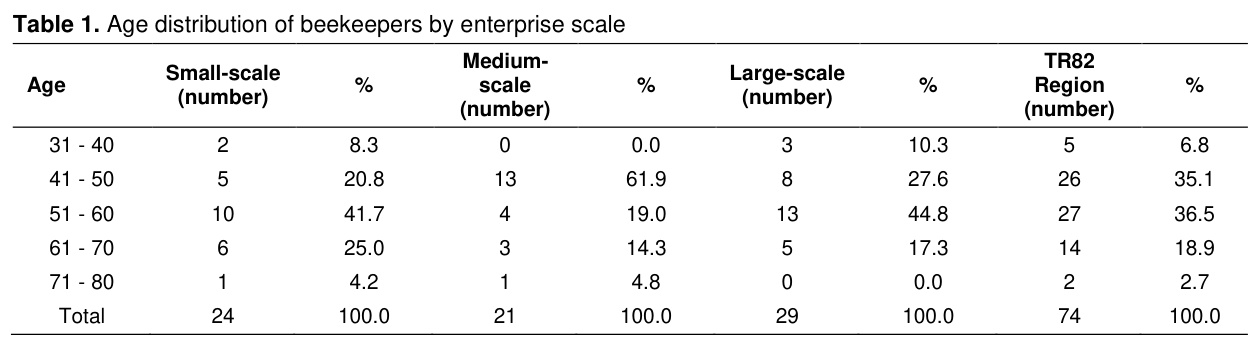
The age distribution of beekeepers across enterprise scales operating in the provinces of the TR82 Region is presented in Table 1.
An examination of the age structure of beekeepers across the TR82 Region reveals that 36.5% of beekeepers fall into the 51–60 age group and 35.1% into the 41–50 age group, together constituting 71.6% of the regional population. Conversely, the proportion of young beekeepers aged 31–40 remains at a notably low level of 6.8%, while the 71–80 age group accounts for 2.7%
When evaluating the prominent findings across enterprise scales, the 51–60 age group has the highest representation in small-scale enterprises at 41.7%, whereas the 41–50 age group predominates among medium-scale enterprises at 61.9%. In large-scale enterprises, management is likewise predominantly concentrated in the 51–60 age group, accounting for 44.8%.
The findings regarding the educational attainment levels of the beekeepers are presented in Figure 1.
An examination of the educational attainment levels of beekeepers across the TR82 Region indicates that primary school graduates account for the largest share at 44.6%, followed by secondary school graduates at 25.7%. While the proportion of university-educated beekeepers is 16.2% region-wide, high school graduates have the lowest share at 13.5%.
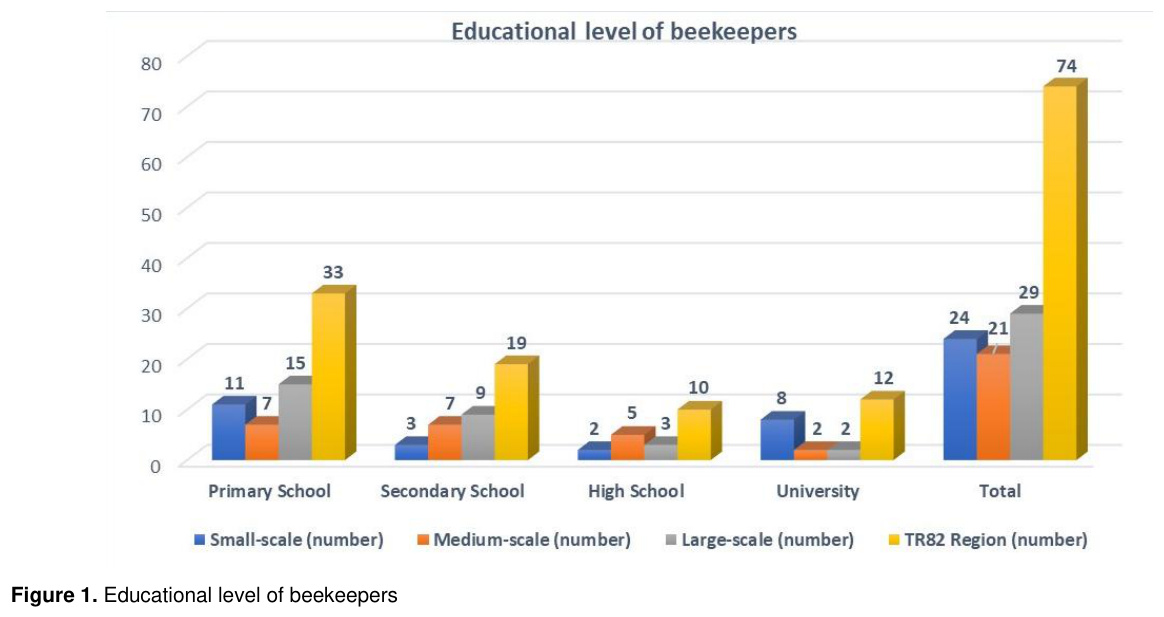
When evaluating educational levels across enterprise scales, primary school graduates rank first in small-scale enterprises with 45.8%, whereas university graduates hold a notable weight at 33.3%. Secondary school graduates constitute the predominant educational tier in medium-scale enterprises at 33.3%, while primary school graduates are the most represented level in large-scale enterprises at 51.7%.
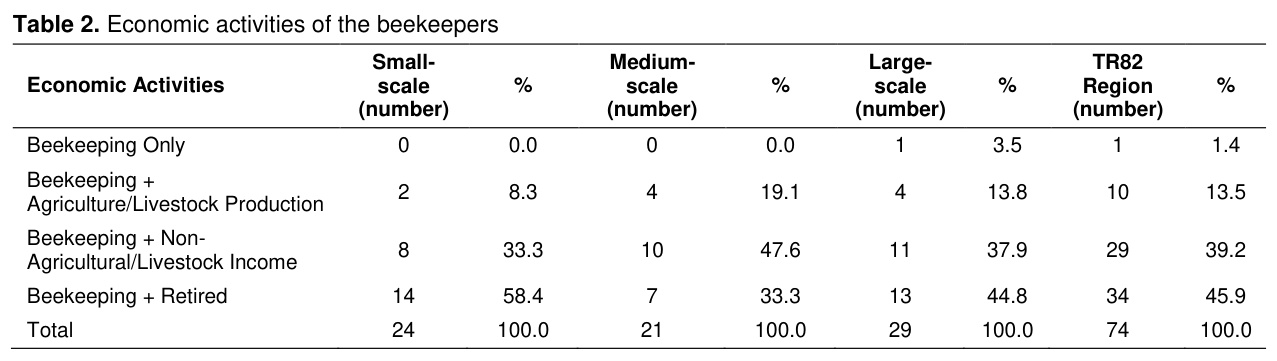
The findings on the economic activities of the beekeepers are presented in Table 2. An examination of the economic activities of beekeepers across the TR82 Region reveals that retirees practicing beekeeping account for the largest share, at 45.9%, followed by those engaged in non-agricultural/livestock activities alongside beekeeping, at 39.2%. The proportion of those combining beekeeping with agricultural and livestock activities remains at 13.5%, whereas the overall share of those pursuing beekeeping as their sole economic activity is only 1.4%.
When evaluating findings on economic activities across enterprise scales, retirees practicing beekeeping show a clear dominance in small-scale enterprises, at 58.3%. In medium-scale enterprises, those engaged in non-agricultural/livestock activities alongside beekeeping rank first with a share of 47.6%, while in large-scale enterprises, retirees practicing beekeeping again constitute the highest represented group at 44.8%.
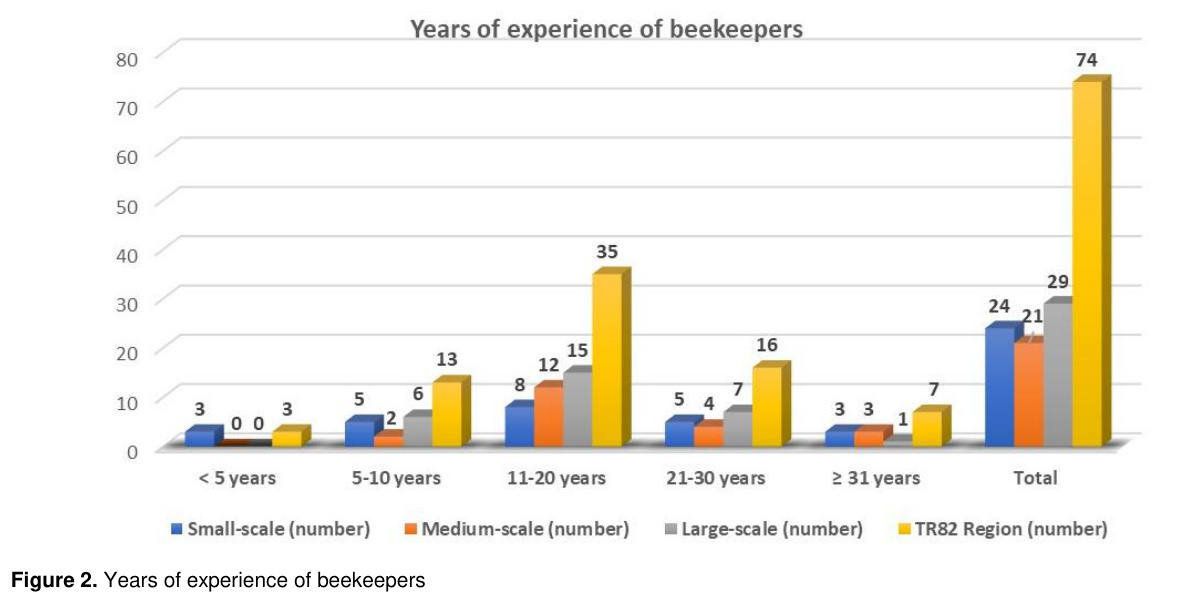
The findings regarding the professional experience duration of beekeepers in the sector are presented in Figure 2. An examination of the sector experience of beekeepers across the TR82 Region indicates that those with 11–20 years of experience account for the largest share, at 47.3%, followed by those with 21–30 years of experience, at 21.6%. While the proportion of those with 5–10 years of experience stands at 17.6% and those with 31 or more years of experience at 9.5%, the overall share of beekeepers with less than 5 years of experience is only 4.1%. The mean experience duration of beekeepers across the TR82 Region was determined to be 19.16 ± 9.65 years.
When evaluating the findings on experience duration across enterprise scales, the 11–20 years experience category ranks first in all scale groups, accounting for 33.3% in small-scale, 57.1% in medium-scale, and 51.7% in large-scale enterprises. Regarding mean experience duration across scale levels, values were 18.44 ± 11.73 years for small-scale enterprises, 21.45 ± 9.96 years for medium-scale enterprises, and 18.20 ± 7.25 years for large-scale enterprises.

For 2020, the average hive stock of beekeeping enterprises across the TR82 Region was 117.15 units; at the enterprise level, this was 46.25 units in small-scale enterprises, 94.29 units in medium-scale enterprises, and 192.38 units in large-scale enterprises. On the other hand, when examining average hive counts at the provincial level, the figures were 129.89 units in Kastamonu province, 113.22 units in Sinop province, and 103.95 units in Çankırı province.
Regarding colony loss among beekeeping enterprises in the TR82 Region, the average colony loss in 2020 was calculated to be 13.53 (~14) hives. When analyzing colony loss across scale levels, losses were identified as 6.17 units in small-scale enterprises, 18.90 units in medium-scale enterprises, and 15.72 units in large-scale enterprises. Furthermore, an evaluation of average colony losses at the provincial level revealed losses of 21.79 units in Kastamonu, 9.41 units in Sinop, and 7.21 units in Çankırı.
Comparisons across scales of educational background, professional experience, and hive loss indicated no significant differences (p>0.05). In contrast, a significant difference was found across scales for hive loss. The results of the comparison of hive losses among enterprise scales are presented in Table 3.
An examination of Table 3 reveals a statistically significant difference in hive losses among the scale groups (χ²=13.050; p=0.001). The results of the pairwise comparisons showed that hive losses in small-scale operations differed significantly from those in both medium-scale (r=0.62) and large-scale (r=0.59) operations. However, no significant difference was found between medium- and large-scale operations.
Discussion
The 63.5% rate of stationary beekeeping determined across the TR82 Region shows similarities with studies conducted in Uşak province (60.8%) and Ardahan province (87.1%) [13,14], serving as a regional continuation of the fully stationary structure (100.0%) observed in the Azdavay district of Kastamonu province [15]. Conversely, these findings distinctly diverge from studies where migratory beekeeping dominates across Türkiye, such as those in the Eastern Black Sea Region (95.0%), Southeastern Anatolia Region (77.8%), Çanakkale province (87.4%), Hatay province (68.5%), Burdur province (67.7%), and Malatya province (84.7%) [16-20].In contrast to the high mobility reported in Muğla (100.0%) and Afyonkarahisar (97.0%) provinces, inter-provincial migratory beekeeping in the TR82 Region holds an extremely limited share, confined solely to medium-scale enterprises. This confirms that beekeepers in the region overwhelmingly prefer stationary and intra-provincial migratory models [21]. Contrary to the low tendencies toward stationary beekeeping documented in Düzce province (31.1%) and Kars province (14.3%), the emergence of stationary beekeeping as the dominant structure across all enterprise scales in our study can be explained by adaptation to local ecological and topographical conditions, coupled with a strategy to keep the production scale within regional boundaries [22,23].
An examination of the production pattern identified across the TR82 Region reveals that while honey production forms the primary basis for all enterprises, 70.3% commercially market alternative bee products alongside honey, such as pollen or propolis, and chestnut honey (56.8%) outweighs blossom honey (43.2%), reflecting the region's rich botanical flora. These findings demonstrate high consistency with the chestnut/blossom dominance and side-product patterns centered on pollen/propolis reported in studies on Sinop province, Düzce province, and the Eastern Black Sea Region (e.g., Gümüşhane, 61.0% pollen) [16,22,24].
Conversely, our results diverge significantly from findings in the Azdavay district of Kastamonu province (100.0% honey only), Hatay province (53.3% producing no alternative products), and Rize province (0%), where non-honey derivatives remain severely limited [15,16,25]. When compared with the advanced product diversification such as commercial royal jelly, bee venom, and beeswax trade documented in Kars, Burdur, and Malatya provinces, as well as the Mediterranean Region, it is evident that enterprises in the TR82 Region have not yet fully transitioned to high-value-added product diversification, remaining primarily constrained to pollen and propolis commerce [19,20,23,26].
The concentration of 71.6% of beekeepers aged 41–60 in the TR82 Region and the low representation of the young population (6.8%) closely mirror the demographic aging trend observed in Türkiye's overall beekeeping profile. The obtained findings show a high degree of overlap with studies conducted in Burdur province (61.5% aged 38–58), Trabzon province (54.3% aged 41–60), Düzce province (76.8% over 40), Yozgat province (mean age 50), the Eastern Black Sea Region (mean age 52.3), Iğdır province (mean age 52), and Kastamonu province (mean age 50.06) [16,19,22,27-30].
Conversely, the present study distinctly diverges from the more dynamic and younger beekeeper profiles reported in Malatya province (55% aged 40 and under), Southeastern Anatolia (mean age 45.7), and the Mediterranean Region (mean age 41.6 in large-scale enterprises) [17,20,26]. When analyzing the distribution of age across enterprise scales, the younger profile observed in medium-scale enterprises (61.9% aged 41–50) contrasts with the general trend in Hatay and Yozgat provinces, where age increases with enterprise scale [18,28]. Although the clustering of 36.5% of regional beekeepers in the 51–60 age group appears relatively more balanced compared to findings from Sinop province (66% over 56) and Azdavay district of Kastamonu province (mean age 55.1), the insufficient participation of the younger population in the sector emerges as a fundamental risk factor for production sustainability [15,24].
The predominance of primary school graduates (44.6%) and the relatively low share of high school graduates (13.5%) across the TR82 Region parallels the traditional structure observed throughout Türkiye, indicating that the vast majority of beekeepers have basic education. Indeed, this finding aligns closely with the low educational profiles documented in studies on Düzce province (73.1% primary/elementary), Azdavay district of Kastamonu province (60.5% primary), Muğla province (78.0% primary), Afyonkarahisar province (66.0% primary), Uşak province (51.8% primary), and Iğdır province (41.2% primary) [13,15,21,22,29].
In contrast, the present study clearly diverges from regional data reporting markedly higher education levels among beekeepers, such as those in Burdur province (32.3% associate degree or above), Hatay province (33.6% high school), Kars province (38.6% high school), and Ardahan province (60.7% high school or above) [19,23,25,31]. Although the proportion of university-educated beekeepers across the region (16.2%) remains limited compared to findings from Sinop province (40.0% higher education or above) and Hatay province (29.9% university), the rise of higher education rates to 33.3% within small-scale enterprises is noteworthy when evaluated by scale [24,25]. Indeed, this relatively higher level of education among small-scale operators reflects the dynamism of younger or hobbyist entrepreneurs entering the sector, aligning with trends toward educated beekeepers observed in Sinop and Burdur provinces [19,24].
The fact that only 1.4% of beekeepers in the TR82 Region practice beekeeping as their sole economic activity demonstrates that, across the region, the sector is adopted as a supplementary income stream or a retirement pursuit rather than a primary source of livelihood. This finding exhibits a high degree of consistency with studies conducted in the Azdavay district of Kastamonu province (1.2%), Ardahan province (6.5%), Düzce province (11.4%), Muğla province (16.0%), and Burdur province (13.9%), where the rate of beekeeping as a primary occupation remains remarkably low [15,19,21,22,31].
In contrast, the present study clearly diverges from regional data where beekeeping stands out as the main source of income, such as in Sinop province (80.0%), Malatya province (69.0%), and the Southeastern Anatolia Region (66.2%) [17,20,24]. The primary ranking of individuals practicing beekeeping alongside retirement across the region (45.9%), a dominance that persists in both small-scale (58.3%) and large-scale (44.8%) enterprises, further supports the aging beekeeper profile. Indeed, the strong preference for beekeeping among retirees and those with non-agricultural supplementary income (39.2%) shows similarities with the high proportions of retirees, tradesmen, and civil servants reported in Iğdır, Kars, and Muğla provinces, revealing that even as production scale expands, the transition to full-time professionalization remains extremely limited [21,23,29].
The mean beekeeping experience of 19.16 ± 9.65 years, determined across the TR82 Region, is highly consistent with studies indicating that the sector throughout Türkiye relies on an established, experienced beekeeper structure. This obtained mean value aligns almost identically with the experience durations recorded in research on the Azdavay district of Kastamonu province (19.14 years), Çanakkale province (19.37 years), Iğdır province (20.00 years), Uşak province (18.47 years), and the Mediterranean Region (18.23 years) [13,15,18,26,29].
The overwhelming majority of beekeepers holding 11 or more years of professional experience across the region (78.4%) confirms the experienced beekeeper profiles observed in studies on Kars province (82.9% with 11+ years), Sinop province (87.0% with 16+ years), Burdur province (60.0% with 11–30 years), and Muğla province (73.0% with 10+ years) [19,21,23,24].
In contrast, while the present study diverges from higher mean experience levels reported in the Eastern Black Sea Region (24.28 years), it distinctly differs from the heavy representation of novice/mid-tenure beekeepers observed in the Southeastern Anatolia Region (68.2% with 0–10 years), Ardahan province (46.3% with 0–10 years), and Malatya province (49.0% with 0–10 years) [16,17,20,31].
When examined by scale, the peak mean experience attained by medium-scale enterprises at 21.45 ± 9.96 years is consistent with the general trend in Uşak, Çanakkale, and Hatay provinces, where experience increases as hive scale expands [13,18,25]. However, the proportion of beekeepers with less than 5 years of experience remaining at just 4.1% reveals that new entrepreneurial entry into regional beekeeping is severely restricted.
The mean hive stock of 117.15 units, determined across the TR82 Region, indicates that the region has a medium-to-large-scale production capacity relative to the average for Türkiye. While this overall mean exhibits relative proximity to the hive counts recorded in studies on the Eastern Black Sea Region (145 units), Hatay province (93.4 units), and Yozgat province (70.08 units), the hive stock attained specifically by large-scale enterprises (192.38 units) demonstrates a high level of agreement with data from the Mediterranean Region (179.06 units) and Kars province (166.8 units) [16,23,25,26,28].
In contrast, while the present study lags behind the high colony capacities documented in research on Erzincan–Van provinces (200.56 units) and the Southeastern Anatolia Region (220.86 units), it clearly surpasses studies characterizing predominantly small-scale or family-run operations, such as those in Uşak province (50.1 units) and Düzce province (84% holding 0–100 hives) [13,17,22,32].
At the provincial level, colony holdings in Kastamonu (129.89 units) and Sinop (113.22 units) provinces are similar to those in Trabzon (105 units) and Bayburt (110 units) provinces in the Eastern Black Sea [16]. The marked increase in capacity observed from small-scale enterprises (46.25 units) to large-scale enterprises (192.38 units) parallels the scale-expansion dynamics reported in Yozgat and Trabzon provinces, highlighting the potential for regional production to transition to commercial scale [27,28].
The mean colony loss of 13.53 (~14) hives determined across the TR82 Region indicates that losses remain at a more reasonable and sustainable level compared to colony losses reported in various other regions of Türkiye. This loss volume is distinctly lower than findings in Iğdır province (21.34–22.91 units) and Burdur province (24.63 units), while exhibiting strong similarity to the 10%–11% proportional hive loss level reported in research on Yozgat province [19,28,29].
In contrast, the present findings clearly diverge from the high loss rates observed in Kars province (33.26 units), where climatic drought was prominent, and Malatya province (15.1%–23.2%), where losses were driven primarily by disease and starvation. At the provincial level, colony loss in Kastamonu (21.79 units) approaches figures from Iğdır and Burdur provinces; conversely, losses in Sinop (9.41 units) and Çankırı (7.21 units) remain markedly more limited, consistent with general loss data from the Eastern Black Sea [16,19,29].
Across enterprise scales, the peak loss observed among medium-scale enterprises reflects shortcomings in colony management and a lack of the required operational focus on beekeeping, due to time devoted to non-beekeeping income sources (self-employment, civil service, wage labor, etc.).
It shows that small-scale beekeeping enterprises experience significantly lower hive losses compared to medium- and large-scale enterprises (Table 3). This can be explained by the fact that small-scale beekeepers can allocate more labor and time per hive, allowing them to manage colonies and monitor Varroa mites and diseases more intensively. Indeed, similar studies in the literature emphasize that as scale increases, the effectiveness of individual care and technical interventions per hive may decrease, leading to higher hive losses [33,34].
The structural dynamics of beekeeping operations in the TR82 Region indicate that the sector is organized around settled and intra-provincial migratory models, while migratory beekeeping remains quite limited. Although honey remains the primary product in the production pattern, the widespread marketing of alternative products such as pollen and propolis indicates a positive trend toward income diversification among the region’s beekeepers. However, the fact that a shift toward high-value-added products such as royal jelly and bee venom has not yet occurred indicates that the operations’ current production potential is not being fully realized.
The predominance of middle-aged and older beekeepers in the region’s beekeeping profile, coupled with the underrepresentation of the younger population in the sector, stands out as the most critical structural weakness in terms of the sustainability of beekeeping. In terms of educational attainment, the predominant share of primary school graduates indicates that the traditional structure persists, while the relatively high proportion of university graduates in small-scale operations signals a promising trend of participation in the sector driven by hobbyists or innovative entrepreneurs. The structure of economic activity confirms that beekeeping is predominantly adopted across the region as a source of supplemental income or a retirement pursuit, and that full-time professionalization remains quite limited.
The distinct variation in hive numbers observed across enterprises scales highlights the region’s potential to achieve medium- to large-scale production capacity; however, it is particularly important to organize field-oriented, hands-on training and extension programs including practical colony management techniques to optimize beekeepers’ workload and time management; seasonal and systemic preventive healthcare practices to combat common bee diseases such as Varroa and Nosema; and spring and fall feeding strategies to prevent the high hive losses observed, especially in medium-scale operations. The variations in losses observed across provinces demonstrate the impact of regional variations in ecological conditions and management practices.
To establish a sustainable structure for beekeeping in the TR82 Region, it is recommended to implement specially designed financial incentives and mentorship programs such as “grants for the purchase of first hives or bee-populated hives,” grants specifically for digital hive monitoring systems and modern beekeeping equipment, and interest-free or low-interest investment loans for a specified period aimed primarily at attracting young entrepreneurs to the sector.
Practical training programs that encourage beekeepers to shift toward value-added products, as well as capacity-building activities in bee health and disease management, should be supported. In future research, an in-depth examination of the effects of climate change on colony dynamics and the socio-economic barriers to new entry into beekeeping will contribute to the development of more comprehensive policy frameworks for the sector’s future.
References
- Polat M, Çevrimli MB, Mat B, et al. Economic analysis of beekeeping enterprises producing chestnut honey Black Sea region in Türkiye. Cogent Food Agric 2023; 9: 2237279.
- Food and Agriculture Organization of the United Nations Statistics Division (FAOSTAT). “Beekeeping Data”. https://www.fao.org/faostat/en/#data/QCL/ 15.07.2026.
- Turkish Statistical Institute (TURKSTAT). “Beekeeping Data for Türkiye”. https://biruni.tuik.gov.tr/medas/?kn= 101&locale=tr/ 15.07.2026.
- Turkish Statistical Institute (TURKSTAT). “Classifications”. https://siniflama.tuik.gov.tr/ Classifications/ClassificationsSatir?surumId=164/ 15.07.2026.
- Orman Genel Müdürlüğü (OGM). “2025 Yılı Orman Varlığı”. https://www.ogm.gov.tr/tr/ormanlarimiz-sitesi/ TurkiyeOrmanVarligi/Yayinlar/2025%20T%C3%BCrkiye%20Orman%20Varl%C4%B1%C4%9F%C4%B1.pdf/ 15.07.2026.
- Kuzey Anadolu Kalkınma Ajansı (KUZKA). “TR82 Düzey 2 Bölgesi Bölge Planı”. https://www.kuzka.gov.tr/page/ tr82-bolge-planlari-295/ 15.07.2026.
- Yamane T. Elementary Sampling Theory. Englewood Cliffs: Prentice-Hall Inc, 1967.
- Cochran WG. Sampling Techniques. 3rd Edition, New York: John Wiley & Sons, 1977.
- Sümbüloğlu K, Sümbüloğlu V. Klinik ve Saha Araştırmalarında Örnekleme Yöntemleri ve Örneklem Büyüklüğü. Ankara: Hatiboğlu Yayınevi, 2005.
- Pallant J. SPSS Survival Manual: A Step by Step Guide to Data Analysis Using SPSS. 4th Edition, Crows Nest: Allen & Unwin, 2010.
- Kalaycı Ş. SPSS Uygulamalı Çok Değişkenli İstatistik Teknikleri. 9. Baskı, Ankara: Asil Yayıncılık, 2018.
- Özdamar K. SPSS ile Biyoistatistik. Yenilenmiş 11. Baskı, Eskişehir: Nisan Kitabevi, 2019.
- Tabur Z, Gül A. Uşak ilinde arı yetiştiricilerinin sosyo-ekonomik durumu ve arıcılığın teknik özelliklerinin belirlenmesi. Mustafa Kemal Üniversitesi Tarım Bilimleri Dergisi 2019; 24(2): 146-152.
- Alıcı SS. Ardahan İli Arıcılığının Yapısal Analizi ve Verim Üzerine Etkili Olan Faktörlerin Belirlenmesi. Yüksek Lisans Tezi, Hatay: Mustafa Kemal Üniversitesi, Fen Bilimleri Enstitüsü, 2015.
- Burucu V, Gülse Bal HS. Arıcılık işletmelerinin pazarlama olanakları: Kastamonu ili Azdavay ilçesi örneği. Tarım Ekonomisi Araştırmaları Dergisi (TEAD) 2018; 4(1): 23-35.
- Kuvancı A, Yılmaz F, Öztürk S, Konak F, Buldağ M. Doğu Karadeniz bölgesi arıcılığına genel bakış. Arıcılık Araştırma Dergisi 2017; 9(2): 47-55.
- Karahan Ş, Özmen Özbakır G. Güneydoğu Anadolu’da arıcılık faaliyetlerinin ve bal tüketim alışkanlıklarının belirlenmesi. Turkish Journal of Agricultural and Natural Sciences 2020; 7(4): 1148-1158.
- Aktürk D, Aydın B. Structural characteristics of beekeeping enterprises and beekeeping activities in Çanakkale province. Turkish Journal of Agriculture - Food Science and Technology 2019; 7(10): 1618-1628.
- Akın AC, Aydoğan H, Özbek BM, Sipahi C. Arıcılık işletmelerinin sosyo-ekonomik yapısının araştırılması: Burdur ili örneği. Veteriner Hekimler Derneği Dergisi 2026; 97(1): 1-16.
- Kutlu MA, Kılıç Ö. Malatya arıcılık faaliyetlerinin genel durum tespiti çalışması. Düzce Üniversitesi Bilim ve Teknoloji Dergisi 2020; 8(1): 737-745.
- Karahan A, Kutlu MA, Karaca İ. Muğla ve Afyonkarahisar ili arıcılık faaliyetleri, sorunları ve çözüm önerileri. ADYUTAYAM Dergisi 2021; 9(2): 112-128.
- Kekeçoğlu M, Rasgele PG, Acar F, Kaya ST. Düzce ilinde arıcılığın yapısı ve arıcılık faaliyetleri üzerine bir araştırma. Duzce University Journal of Science and Technology 2014; 2(1): 1-15.
- Varalan A, Çevrimli MB. Kars ilinde arıcılık işletmelerinin sosyo-ekonomik yapısı üzerine bir araştırma. Dicle Üniversitesi Veteriner Fakültesi Dergisi 2023; 16(2): 102-107.
- Albayrak T. Sinop İli Arıcılık Sektörünün Ekonomik Yapısı Üzerine Araştırma. Yüksek Lisans Tezi, İstanbul: Maltepe Üniversitesi, Lisansüstü Eğitim Enstitüsü, 2019.
- Hallaçoğlu Y. Hatay İli Arıcılığının Yapısal Analizi. Yüksek Lisans Tezi, Hatay: Mustafa Kemal Üniversitesi, Fen Bilimleri Enstitüsü, 2021.
- Subaşı OS, Uysal O, Seçer A, et al. Economic analysis of beekeeping operations and factors affecting production in Mediterranean region of Turkey. Tarım Ekonomisi Araştırmaları Dergisi 2019; 5(2): 90-100.
- Keleş OC. Trabzon İlinde IPARD Programı Kapsamındaki Arıcılık Hibelerinin Etkinliğinin Belirlenmesi. Yüksek Lisans Tezi, Erzurum: Atatürk Üniversitesi, Fen Bilimleri Enstitüsü, 2018.
- Yıldız AK, Ayyıldız M, Ayyıldız B, Arslan S. Yozgat ili arıcılık işletmelerinin teknik ve sosyo-ekonomik durumunun incelenmesi. Türk Tarım - Gıda Bilim ve Teknoloji Dergisi 2022; 10(5): 846-852.
- Kadirhanoğulları İH, Karadaş K, Külekci M. Iğdır ili arıcılarının sosyo-ekonomik durumu. Uludağ Arıcılık Dergisi 2016; 16(1): 2-11.
- Diler Z. Beekeeping activities in Kastamonu rural area. Turkish Journal of Agriculture - Food Science and Technology 2026; 14(2): 556-568.
- Ayvazoğlu Demir P, Aydın E, Yazıcı K, Kırmızıbayrak T. Ardahan ilinde arıcılık işletmelerinin sorunları ve beklentileri. Eurasian Journal of Veterinary Sciences 2017; 33(4): 260-267.
- Aşkan E. Increasing honey production effectiveness in Erzincan and Van provinces. Sustainability 2023; 15(9): 7524.
- Currie RW, Pernal SF, Guzmán-Novoa E. Honey bee colony losses in Canada. Journal of Apicultural Research 2010, 49(1), 104-106.
- Chauzat MP, Cauquil L, Roy L, et al. Demographics of the European apicultural industry. PloS one, 2013; 8(11), e79018.